Cornerstone Autism Learning Center in Indiana is Now BACA – Part of LEARN Behavioral

LEARN Behavioral, a national leader in autism treatment with a network of ABA providers and Learning Centers across the country, announces the integration and rebrand of Cornerstone Autism Center in Avon, Greenwood, and West Lafayette, Indiana.

Cornerstone Autism Center is now known as the Behavior Analysis Center for Autism (BACA) at the following locations:

The new BACA Learning Centers offer center-based ABA therapy in a supportive, learning-rich environment. Families can access compassionate, contemporary applied behavior analysis (ABA) therapy tailored to their child’s or young adult’s unique needs, interests, and personality.

“Our focus is on providing top-quality care that delivers real results for children and families,” said Stacy Apraez, MA, BCBA, Senior Regional Clinical Director. “We are excited to have the opportunity to partner with families in and around the Avon, Greenwood, and West Lafayette areas to help find success for every child in our care.”

Key Features of BACA Learning Centers in Avon, Greenwood, and West Lafayette:

  • Experienced leadership brings resources and support to children and families with autism in the community.
  • Center-based ABA therapy, which includes a learning-rich environment, unique play-based learning spaces, and one-on-one support.
  • Serving children from early childhood through young adulthood with personalized therapy plans.
  • Conveniently located and easily accessible for families in the region.

BACA is now enrolling new clients with no waitlist. For more information or to enroll a child, contact the center directly:

To enroll a child at the Avon Learning Center, call (317) 622-8904 or visit https://thebaca.com/locations/avon

To enroll a child at the Greenwood Learning Center, call (317) 981-3899 or visit https://thebaca.com/locations/greenwood

To enroll a child at the West Lafayette Learning Center, call (765) 222-5893 or visit https://thebaca.com/locations/west-lafayette

About BACA

The Behavior Analysis Center for Autism (BACA) is part of the LEARN Behavioral network, the nation’s leading provider of compassionate autism care. BACA provides evidence-based autism services and is dedicated to delivering personalized ABA therapy, helping children and families find success.

In addition to the Avon, Greenwood, and West Lafayette Learning Centers, BACA has Learning Centers in Crown Point, Elkhart, Fishers, Indianapolis, South Bend, and Zionsville, IN.

For more information, visit https://thebaca.com/locations.

About LEARN Behavioral

LEARN Behavioral is a national leader in autism treatment, offering comprehensive diagnostic services and contemporary applied behavior analysis (ABA) therapy for children with autism spectrum disorder (ASD). With a nationwide network of ABA providers and more than 100 Learning Centers across the country, LEARN delivers the highest standard of evidence-based care—customized to meet the unique needs and interests of each child and family. For more information, visit learnbehavioral.com.

Five Sensory-Friendly Places to Visit in and Around Norco, California

Some places are simply easier places for families to go. 

They are not perfectly quiet or empty. They just feel manageable. Noise does not build too fast. Crowds tend to spread out instead of bunching up. There is room to walk, sit, or take a break without drawing attention. Families can stay for a short time or longer, depending on how a child is doing. 

Parents of children with sensory sensitivities learn which places work by experience. They notice where outings feel calmer and where things unravel quickly. Certain locations become dependable options they can return to. 

Norco has more of these places than people often realize. Its open spaces, trail systems, and slower pace create everyday spots where families can spend time together more comfortably. 

Here are five sensory-friendly places in and around Norco that families often return to. 

1. Santa Ana River Trail gives families room to move 

The Santa Ana River Trail runs along the edge of Norco with wide, paved paths. The trail feels open, and families can walk, use scooters, or simply sit and watch what is happening around them. Because the space does not change much from one section to the next, children can see what is coming. That consistency can make a big difference. 

Tip for families: Choose a short, familiar stretch and turn back when needed. Repeating the same section can help children feel more comfortable. 

2. The Ingalls Event Center offers laid-back ambiance  

The Ingalls Event Center reflects what Norco is known for: horses, open land, and a slower rhythm. It’s an agricultural, equestrian, and animal-keeping center where the grounds are spread out. On days without large events, families often walk the perimeter or watch riders from a distance. There is plenty to see without needing to join in. 

Tip for families: Check the event calendar before you go. Non-event mornings are usually quieter. 

3. Hidden Valley Wildlife Area is good for quiet outdoor time 

The Hidden Valley Wildlife Area sits in the Norco Hills and offers dirt trails, native plants, and wide views. There are no playgrounds or scheduled activities. Families set their own pace. Children who like to look at rocks, plants, or insects often do well here. There is no pressure to move quickly or cover a certain distance. 

Tip for families: Walk the same loop each visit. Predictable paths help reduce surprises. 

4. Norco College Library offers a quiet place to pause 

The Norco College Library provides a calm, organized space with clear expectations. Lighting stays even. Voices stay low. Families can read, sit together, or take a break from busier environments. Because it is on a college campus, the library often feels less crowded than public branches, especially outside class rush times. 

Tip for families: Midmorning tends to be the quietest time. Staff can help point out less busy seating areas. 

5. Pumpkin Rock Trail lets families control the outing 

The Pumpkin Rock Trail is a popular local hike, but it also works well for flexible outings. The trail is easy to follow and open enough that families can stop, take breaks, or turn back at any point. The scenery stays fairly consistent, which helps children stay comfortable without too much sensory input. 

Tip for families: Go earlier in the day, especially in warmer months, to avoid heavier foot traffic. 

Looking for more support? 

Getting out into the community is one piece of daily life. Ongoing support can help too. 

Families in Norco and nearby communities can connect with Autism Spectrum Therapies, (AST) part of LEARN Behavioral. Autism Spectrum Therapies provides applied behavior analysis therapy that reflects each child’s needs, strengths, and personality, both at home and in the community. 

New Autism Learning Center Opens Doors in Fall River, MA

No Waitlist for Families in Bristol County Area

Behavioral Concepts (BCI), a provider of LEARN Behavioral, is proud to announce the opening of its new location at 1151 Robeson St., Suite 101, Fall River, Massachusetts 02720.

BCI is a leading contemporary applied behavior analysis (ABA) provider of center-based services for children with autism and Down syndrome. The Fall River Learning Center provides Early Intervention, center-based and in-home ABA therapy, diagnostic services, and parent education to children with autism ages 2-6. It also offers center-based and in-home ABA services for individuals with Down syndrome, up to age 21.

“We are excited to have the opportunity to partner with families in the South Coast region,” said Aerin Parish-Toscano, MS, BCBA, LABA, Regional Clinical Director. “We value being a part of the Fall River community and look forward to helping find success for every child in our care.” 

Key Features of the Fall River Learning Center:

  • Large facility which includes an indoor gross motor space for physical and social development, as well as a dedicated family meeting/treatment guidance room for parent participation.
  • ABA therapy, which includes a learning-rich environment, unique play-based learning spaces, and one-on-one support.
  • Access to nearby public playground.
  • No waitlist and in-home afternoon and weekend services to accommodate busy family schedules.
  • Serving children 2- 6 years old with autism with personalized therapy plans.
  • Conveniently located near I-195 and Route 24.

The center is now enrolling new clients based in Berkley, Dartmouth, Dighton, Fall River, Freetown, Somerset, Swansea, and Westport with no waitlist and flexible treatment hours.

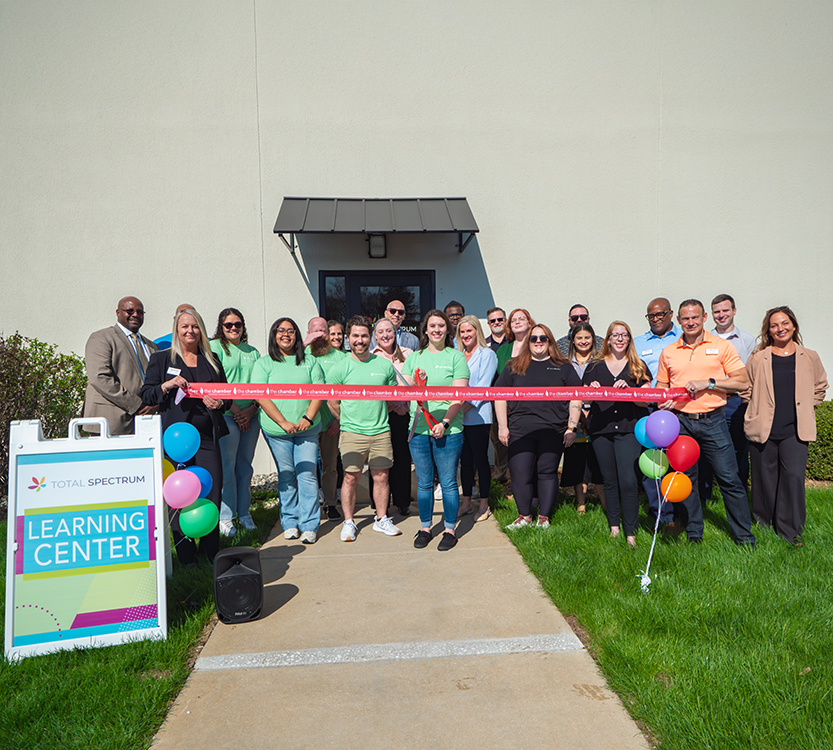
A ribbon-cutting ceremony will be held in the spring.

About BCI

BCI, part of the LEARN Behavioral network, is one of the nation’s leading providers of compassionate autism care. For more than 20 years, BCI has been delivering evidence-based services, helping children with autism and Down syndrome find success and reach their unique potential.

In addition to the Fall River Learning Center, BCI has existing center-based ABA therapy Learning Centers in Beverly, Brockton, Fitchburg, Framingham, Lawrence, Littleton, Lowell, Newton, New Bedford, Springfield, Taunton, Wilmington, two locations in Worcester, MA, and a location in Nashua, NH.

For more information or to enroll a child at the Fall River Learning Center, call (508) 363-0200 or visit https://bciaba.com/locations/fall-river.

About LEARN Behavioral

LEARN Behavioral is a national leader in autism treatment, offering comprehensive diagnostic services and contemporary applied behavior analysis (ABA) therapy for children with autism spectrum disorder (ASD). With a nationwide network of ABA providers and more than 100 Learning Centers across the country, LEARN delivers the highest standard of evidence-based care—customized to meet the unique needs and interests of each child and family. For more information, visit learnbehavioral.com.

SPARKS ABA Learning Center Now Open in Springfield, VA

No Waitlist and Expanded Year-Round Services for Fairfax County Area Families

SPRINGFIELD, VA… SPARKS ABA, a provider of LEARN Behavioral, has recently opened the doors of its new Learning Center at 5501 Backlick Road, Springfield, VA 22151.

SPARKS ABA is Virginia’s premiere contemporary applied behavior analysis (ABA) provider of center-based autism services for children and adolescents ages 18 months to 15 years. The Backlick Rd. Learning Center is SPARKS ABA’s second location in Springfield.

“We are thrilled to open our doors and expand our compassionate, contemporary ABA therapy for children with autism spectrum disorder (ASD) and families throughout Fairfax County,” said Kayla Bagnato. “Through highly personalized support, we aim to empower each child and young adult to gain independence to succeed in school and life and reach their highest potential.”

The new Springfield Learning Center offers center-based and in-home ABA services, SPARK Saturdays (social skills group), and parent education/training.

Key Features of the Springfield Learning Center:

  • Large facility which includes a gross motor space for physical and social development.
  • ABA therapy, which includes a learning-rich environment, unique play-based learning spaces, and one-on-one support.
  • Serving children ages 18 months to 15 years old with personalized therapy plans.
  • Launchpad Learning – a school readiness program for children ages 2 to 6.
  • No waitlist and flexible treatment hours that include after-school hours to accommodate busy family schedules.
  • Conveniently located right off I-495 and I-395, and easily accessible for families in the region.

The center is now enrolling new clients in the Fairfax County area and beyond.

SPARKS ABA, part of LEARN Behavioral, a national leader in compassionate autism treatment, has been a leading provider of evidence-based autism services for 15 years. SPARKS ABA is dedicated to personalized, high-quality ABA therapy. For more information or to enroll a child at the Springfield Learning Center, call (703) 373-7557 or visit https://www.sparksaba.com.

About LEARN Behavioral

LEARN Behavioral is a national leader in autism treatment, offering comprehensive diagnostic services and contemporary applied behavior analysis (ABA) therapy for children with autism spectrum disorder (ASD). With a nationwide network of ABA providers and more than 100 Learning Centers across the country, LEARN delivers the highest standard of evidence-based care—customized to meet the unique needs and interests of each child and family. For more information, visit learnbehavioral.com.

LEARN Behavioral Opens Doors of New Autism Learning Center in Chula Vista, CA.

Autism Spectrum Therapies (AST), a provider of LEARN Behavioral, is proud to announce the opening of its new Chula Vista Learning Center at 660 Bay Blvd., Suite 110 & 111, Chula Vista, CA 91910.

AST provides contemporary applied behavior analysis (ABA) center-based autism services for children ages 1-12 years. The Chula Vista Learning Center provides center-based, in-home, and community-based ABA therapy and individualized programs, including Early Intervention, Social Skills Programs, and parent education.

“We’re excited to have the opportunity to partner with new families in the San Diego area and look forward to helping find success for every child in our care,” said Heather Link, M.A., BCBA, Regional Clinical Director.

Key Features of the Chula Vista Learning Center:

  • Large facility which includes an indoor gross motor spacefor physical and social development.
  • ABA therapy, which includes a learning-rich environment, unique play-based learning spaces, and one-on-one support.
  • A unique combination of center-based, in-home, and community-based services to best cater to families’ needs.
  • A school readiness program, as well as summer programs and school break camps. Social skills groups include Weekend Club and Friday Night Hang Out.
  • Flexible treatment hours to accommodate busy family schedules.
  • Serving children 1-12 years old and teen programs coming soon.
  • Conveniently located near Chula Vista Marina and easily accessible via I-5 and CA-94 for families in the region.

The center is now enrolling new clients based in greater San Diego with flexible treatment hours.

About AST

AST, part of the LEARN Behavioral network, is one of the nation’s leading providers of compassionate autism care. The Chula Vista Learning Center is AST’s second ABA therapy location in San Diego County. They also have a Learning Center in San Marcos and a corporate office in San Diego.

For more information or to enroll a child at the Chula Vista Learning Center, call (866) 727-8274 or visit https://autismtherapies.com/locations/san-diego

About LEARN Behavioral

LEARN Behavioral is a national leader in autism treatment, offering comprehensive diagnostic services and contemporary applied behavior analysis (ABA) therapy for children with autism spectrum disorder (ASD). With a nationwide network of ABA providers and more than 100 Learning Centers across the country, LEARN delivers the highest standard of evidence-based care—customized to meet the unique needs and interests of each child and family. For more information, visit learnbehavioral.com.

Autism Spectrum Therapies announces Free Sensory-Friendly Halloween-Themed Events in Menifee, Riverside, and Victorville

Families throughout the region are invited to free sensory-friendly “Trunk or Treat” and “Trick or Treat” events at Autism Spectrum Therapies (AST) in Menifee, Riverside, and Victorville.

  • Friday, October 17, 2025, from 4:30-6 p.m., a Trunk-or-Treat event will be held at AST’s Riverside ABA Learning Center, 6235 River Crest Drive, Suite O/P, Riverside, CA 92507.
  • Friday, October 17, 2025, from 3-5 p.m., a Trunk-or-Treat event will be held at AST’s Victorville ABA Learning Center, 15450 W Sand Street, Victorville, CA 92392.
  • Friday, October 24, 2025, from 4-6 p.m., a Trick-or-Treat event will be held at AST’s Menifee ABA Learning Center, 29950 Haun Road, Menifee, CA 92586.

AST’s Halloween-themed events bring families together for sweet treats and smiles in a supportive environment. Events are free and open to the public.

Inland Empire ABA Learning Centers

AST, part of the LEARN Behavioral network, is one of the nation’s leading providers of compassionate autism care. AST is a premiere contemporary applied behavior analysis (ABA) provider of center-based autism services for children and adolescents. The three Inland Empire ABA Learning Centers provide center-based, in-home, and school-based ABA therapy, Social Skills Programs, and parent education.

The Menifee, Riverside, and Victorville locations opened earlier this year and provide ABA therapy, which includes a learning-rich environment, unique play-based learning spaces, and one-on-one support. There’s no waitlist at these locations, and flexible treatment hours accommodate busy family schedules.

For more information or to enroll a child, call (866) 727-8274 or visit https://autismtherapies.com/locations/inland-empire

About LEARN Behavioral

LEARN Behavioral is a national leader in autism treatment, offering comprehensive diagnostic services and contemporary applied behavior analysis (ABA) therapy for children with autism spectrum disorder (ASD). With a nationwide network of ABA providers and more than 100 Learning Centers across the country, LEARN delivers the highest standard of evidence-based care—customized to meet the unique needs and interests of each child and family. For more information, visit learnbehavioral.com.

How Dania Tonelli Swapped Snow for Sunshine and Grew Her Career Along the Way

She wanted a change. LEARN made it possible 

Dania Tonelli had spent her whole life in Massachusetts. She grew up there, went to college and grad school there, and started her career there, too. 

But after years of New England winters and the same familiar routine, she was ready for something different. 

“I’d just been there a long time,” she says. “I was ready for something new.” 

She had always loved visiting California and narrowed her options to two places: the Bay Area or San Diego. After a quick scouting trip, San Diego won out. 

“I knew I wanted to keep working with LEARN, I just wasn’t sure if it was possible,” she says. “But I talked to my clinical director, and she reached out. Even though there wasn’t a job posted, the team out here said yes. They told me to come anyway.” 

A long drive and a smooth landing 

Dania packed her car, took a few weeks off, and drove across the country. She stopped at as many national parks as she could along the way. 

“I used my PTO to take time off, which was so helpful,” she says. “When I got here, everything was seamless. My insurance, logins, and systems all transferred. I was able to pick up right where I left off.” 

The San Diego team created a temporary spot for her until she could take over a full caseload. A clinician was about to go on maternity leave, so the timing worked out well. 

Career growth and a new lifestyle 

Since the move, Dania has been promoted twice. She started as a behavior analyst and is now the center director for AST’s San Marcos and Poway locations. 

“There were just more opportunities out here,” she says. “And I’ve learned from so many different people. That helped me grow a lot.” 

The move also gave her room to explore personal passions. Dania is active in animal rescue and has fostered more than a dozen dogs since settling in Southern California. 

“I think I’m on my 15th foster dog now,” she says. “This lifestyle really lets me do more of the things I love.” 

A team that shows up for each other 

From day one, Dania says she felt welcomed. Coworkers helped her adjust and made sure she understood new systems and processes. 

“We have a group text where anyone can ask for help,” she says. “People always jump in, even if it’s not their job. Everyone is focused on helping the kids, supporting each other, and making things work.” 

She also got to shadow parts of the BT training, which helped her understand how services were delivered in her new region. 

Why she encourages others to transfer 

Dania has been with LEARN since 2017 and is quick to support team members who want to move. 

“I always check the job site for them,” she says. “It’s such a relief to know you can move and still have a job, a team, and a path forward.” 

She says transferring is one of the best ways to grow both professionally and personally. 

“You don’t lose progress,” she says. “You just keep going.” 

LEARN Behavioral’s nationwide network offers flexibility for employees to continue their careers across state lines. Dania’s story is just one example of what’s possible with thoughtful planning and a strong support system. 

Want to learn more about internal transfers and job opportunities within LEARN Behavioral? Visit LEARN’s careers page to explore current openings across the country. 

From Coast to Capital: How Leah Jones Transferred Roles After a Military Move 

Just a year into her job in California, Leah Jones learned her husband, a Marine, had been ordered to relocate to Maryland. 

Leah was a board certified behavior analyst (BCBA) at LEARN Behavioral’s Autism Spectrum Therapies (AST) San Marcos Learning Center. She expected she’d have to apply for new jobs and face a delay between roles. But thanks to LEARN’s national network, she was able to continue working without interruption. 

When she found out her husband had new orders for Joint Base Andrews, Maryland, Leah contacted her clinical director. She figured she’d have to resign and hope for the best on the East Coast. Instead, she found support, open communication, and a seamless transfer. 

Both AST and SPARKS are part of LEARN Behavioral’s nationwide group of providers. Because of this, Leah was able to move directly into a new BCBA role at SPARKS’ Springfield, Virginia office. Her story reflects how LEARN helps clinicians continue their careers across state lines, reducing stress and avoiding gaps in employment. 

“I fully anticipated I’d have to do the norm: apply for jobs, go through the whole thing,” Leah says. “There’s usually a delay, a month or two between jobs. But it was really seamless.” 

Unexpected Orders, Smooth Transition 

Leah had been with AST for a year when the move came. Though she and her husband had planned to stay in California longer, they got orders earlier than expected. Leah reached out to her regional clinical director, Michelle Stone, to give several months’ notice and ask about next steps. Michelle connected her with Kayla Bagnato, a regional director for SPARKS, who let her know there were open positions in the area. 

Within weeks, they worked out a transition.  

“I worked up until we moved,” Leah says. “We took two weeks off to actually do the full, complete move, to drive and get unpacked. Then I started here at the end of the two weeks. It was really nice. It definitely reduced a lot of the stress to do with a move.” 

Adjusting to a New Environment 

Leah now lives at Joint Base Andrews and commutes about 23 miles to the Springfield Learning Center. A few months in, she’s adjusting to a new commute and environment. 

At AST, she mostly worked in homes. Now, she primarily works in a center with some community-based clients. Still, she says the transition has been relatively smooth. 

“The structure as a whole was pretty cohesive,” Leah says. “There are definitely some differences, mainly because of funding sources on the East Coast versus West Coast. But as a whole, it’s pretty similar.” 

Advice for Others 

Leah encourages others who may need to relocate to reach out early and communicate openly. 

“It was honestly pretty easy,” she says. “Michelle helped me on the front end, and Kayla handled a lot on the back end.” 

She recommends asking about caseloads, billable hours, and the nature of the new work setting to avoid surprises. 

LEARN Behavioral’s coast-to-coast network allows clinicians like Leah to stay with the company, no matter where life leads. With planning and support, transferring within the organization is not only possible, but also practical. 

Want to learn more about internal transfers and job opportunities within LEARN Behavioral? Visit LEARN’s careers page to explore current openings across the country. 

From Coast to Coast: How Angela Chang Continued Her Career with LEARN Behavioral After a Cross-Country Move 

After 14 years with LEARN Behavioral, Angela Chang didn’t want to leave the company behind when she and her husband decided to move from Southern California to Maryland. Thanks to the organization’s national presence, she didn’t have to. 

Angela, a managing behavior analyst, had been with Autism Spectrum Therapies (AST), working in Monrovia, California. When she relocated to Bowie, Maryland, she transferred to SPARKS and is now managing the newly opened Waldorf Learning Center.  

Both AST and SPARKS are among LEARN Behavioral’s network of brands providing high-quality applied behavior analysis (ABA) therapy across the country. Thanks to LEARN’s national network, Angela figured out how to seamlessly transfer to another job within the organization. Her story of transition reflects LEARN’s commitment to supporting clinicians, expanding access to care, and delivering personalized ABA nationwide. 

Angela and her husband had long planned to move out of California for a slower pace of life. “We just wanted a slower walk of life, more access to nature, less traffic,” Angela says. 

Planning Ahead Paid Off 

Angela began planning her transition two years before the move. She searched LEARN’s internal careers page to see which regions had openings for her role and reached out to clinical leaders at SPARKS and Trellis Services, both based in Maryland. 

Her clinical director in California helped her connect with local directors in Maryland. Angela also traveled there about a year in advance to tour facilities and determine the best fit. 

“I’d rather have things lined up and be overprepared and know what’s going to happen,” she says. “At least I know I’m checking all of my boxes.” 

She finalized her wedding and her cross-country move within weeks of each other. Thanks to early planning, she stepped into her new position without missing a beat. 

From In-Home to Center-Based Care 

Angela continues to support mid-tier supervisors and helps lead onboarding at the Waldorf Learning Center. As a leader in the Emerging Behavior Analyst (EBA) program both at AST and SPARKS, she mentors technicians working toward their board certified behavior analyst (BCBA) certification, modeling how to manage caseloads and navigate professional challenges. 

Her new setting differs from her previous in-home and school-based work. “Here, I’m managing not just people, but everything else that goes into running the center, from making sure we have enough supplies to keeping the walls decorated,” she says. 

She also serves on LEARN’s Neurodivergent Advisory Committee (NAC), helping improve communication, workplace inclusivity, and clarity of HR materials across departments. 

Advice for Others Considering a Transfer 

Angela encourages others within LEARN to consider transferring if life leads them to a new location, or if they are looking for a different set of professional growth opportunities. 

“Talk to your director,” she says. “The process can take time, especially if there isn’t a position available right away. Stay organized and communicate with everyone who could potentially be impacted by your transition in both your personal and professional lives.” 

LEARN Behavioral’s nationwide network offers flexibility for employees to continue their careers across state lines. Angela’s story is just one example of what’s possible with thoughtful planning and a strong support system. 

Want to learn more about internal transfers and job opportunities within LEARN Behavioral? Visit LEARN’s careers page to explore current openings across the country. 

Navigating Mental Health in Today’s Workforce: LEARN’s Perspective

Why Mental Health Is a Leadership Priority

As leaders, we hold a unique responsibility: shaping environments where people can thrive—not just in productivity, but also in well-being. Mental Health Awareness Month is a timely opportunity to reaffirm our role in normalizing conversations around mental health in the workplace and embedding care into the very fabric of our organizations.

Recognizing Mental Health Struggles in the Workplace

As a Chief Human Resources Officer, I’ve witnessed firsthand how employee mental health challenges show up in the workplace—often quietly, through disengagement, increased absenteeism, or strained team dynamics. Behind performance metrics are people navigating anxiety, burnout, caregiving responsibilities, or personal loss.

How Intentional Mental Health Support Transforms Organizations

I’ve also seen the powerful effect of intentional support: when organizations create space for vulnerability, provide access to care, and train leaders to respond with empathy, they transform not only individual well-being but organizational resilience. Mental health at work isn’t a “soft” issue—it’s a core business priority that shapes culture, productivity, and retention.

Mental Health in the Workplace: Key Stats Leaders Should Know

The Workforce Institute at UKG published a recent study reporting that 70% of people say their manager’s impact on employee mental health is greater than that of a healthcare provider or therapist—and equal to their spouse or partner.

The data is both concerning and motivating. According to the American Psychological Association (2023), 77% of employees have experienced work-related stress in the past month, and 57% report negative mental health impacts because of their job. The World Health Organization estimates that depression and anxiety cost the global economy $1 trillion each year in lost productivity.

A Multidimensional Approach to Supporting Employee Mental Health

Our approach must be multidimensional:

  • Normalize mental health in the workplace conversations by training managers to respond with empathy and equipping teams with mental health literacy. This creates psychological safety and gives managers tools to refer employees to appropriate resources.
  • Design benefits that reflect modern needs: Mental health apps, embedded mental health care, and inclusive time-off policies aren’t perks—they’re workforce essentials.
  • Embed mental health in leadership expectations: When executives model transparency, prioritize balance, and advocate for wellness, they shift culture more powerfully than any policy can.

HR’s Role in Supporting Mental Health at Work

HR is not merely a facilitator in this work. We are architects of the employee experience. When mental health at work is recognized as a key component in engagement, retention, and performance, Mental Health Awareness Month becomes more than a moment of recognition—it becomes a catalyst for sustained change.

LEARN’s Proactive Approach to Employee Mental Health Programs

At LEARN, we recognize the importance of addressing these challenges head-on. We have several key resources aimed at supporting our staff’s well-being and employee mental health programs:

  • Employee Assistance Program (EAP): Our EAP is the first stop for accessing a variety of support services, including confidential assessments, short-term counseling, referrals, and follow-up care. Learn more at www.liveandworkwell.com.
  • Caregiving Network: Understanding the demands of caregiving in the midst of a growing shortage of childcare, we offer access to resources for finding caregivers through Care.com—for children, adults, or pets.
  • 24/7 Therapy Access: Through our benefits, employees have access to therapy services, including virtual options such as Talkspace, initiated through the EAP.
  • Well-Being Video Library: Our United at Work Health & Wellness ON DEMAND Videos cover more than 70 health-related topics, providing valuable information on everything from mental health to physical wellness. 

Creating a Culture of Mental Health and Support

As we continue shaping a workplace where people feel seen, supported, and valued, mental health at work must remain a core focus—not just during Mental Health Awareness Month, but every day. At LEARN, our commitment to well-being is more than a benefit—it’s a reflection of who we are. By caring for our people, we strengthen our teams, mission, and, ultimately, the communities we serve. If you’re struggling, know that support is available—and reaching out is a sign of strength.