The Autism Journey: Accepting vs. Resisting A Diagnosis
FEATURED POSTS
September 15, 2026
September 11, 2026
We’re hiring BTs, BCBAs, Clinical Psychologists & More. View open positions
FEATURED POSTS
BY KATHERINE JOHNSON, M.S., BCBA
SENIOR DIRECTOR OF PARTNERSHIPS
Looking back at 2021, there were significant developments, both in research and thought leadership, in the field of autism and applied behavior analysis (ABA). Here are some studies and papers you don’t want to have missed!
2021 gave us another important building block in the ongoing investigation in to how and why autism manifests differently in girls than in boys. A study by Jack et. al. found that there was a much greater difference in brain activity in autistic and non-autistic girls, than was previously found between autistic and non-autistic boys when viewing biological motion. In the second half of the investigation, they looked at the girls’ DNA. What they found (greater differences in brain activity and more gene mutations among the girls) bolsters the “Female Protective Effect” theory, which holds that girls require more genetic predisposition to autism in order to show autistic traits. Inquiries into how autism manifests differently depending on sex is integral to being able to more accurately identify and support girls on the spectrum.
Allison Jack, Catherine A W Sullivan, Elizabeth Aylward, Susan Y Bookheimer, Mirella Dapretto, Nadine Gaab, John D Van Horn, Jeffrey Eilbott, Zachary Jacokes, Carinna M Torgerson, Raphael A Bernier, Daniel H Geschwind, James C McPartland, Charles A Nelson, Sara J Webb, Kevin A Pelphrey, Abha R Gupta, the GENDAAR Consortium, A neurogenetic analysis of female autism, Brain, Volume 144, Issue 6, June 2021, Pages 1911–1926, https://doi.org/10.1093/brain/awab064
Many behavior analysts have heeded the call to focus on their own cultural competence and anti-racism work; this paper outlines ways they can put those skills to good use. Crowe and Drew review the history and current state of a social injustice faced by many people with disabilities: segregation via incarceration. The authors posit that behavior analysts can help to interrupt the “school-to-prison pipeline” and outline their theory. Although the authors call for a grand restructuring of the prison system (including abolition of the current system), they also offer thoughts on how behavior analysis could improve current institutions.
Crowe, B., & Drew, C. (2021). Orange in the new asylum: Incarceration of individuals with disabilities. Behavior Analysis in Practice, 14(2), 387-395. https://doi.org/10.1007/s40617-020-00533-9
If you have been following the conversation about ABA and neurodiversity, you’ll want to read this paper. A group of Autistic and Non-Autistic authors challenge the belief that ABA is inherently harmful for Autistic people and proposes the perspective that behavioral interventions can be “compatible with the neurodiversity paradigm.” After a history of autism and behavioral interventions, the authors delve into a thorough discussion of how Naturalistic Developmental Behavior Interventions may bridge the gap between opposing viewpoints about the use of behavioral interventions with people on the spectrum.
Schuck RK, Tagavi DM, Baiden KMP, Dwyer P, Williams ZJ, Osuna A, Ferguson EF, Jimenez Muñoz M, Poyser SK, Johnson JF, Vernon TW. Neurodiversity and Autism Intervention: Reconciling Perspectives Through a Naturalistic Developmental Behavioral Intervention Framework. J Autism Dev Disord. 2021 Oct 13. doi: 10.1007/s10803-021-05316-x. Epub ahead of print. PMID: 34643863.
And the Functional Analysis (FA) gets another twist! Thomas et. al. assessed whether or not paying attention to indices of happiness would assist in finding effective interventions to decrease challenging behavior. They found that when interventions were derived from what they learned about the children’s happiness, they were as effective as interventions based solely on the function of the challenging behavior, and they were associated with more behavior associated with happiness. In the search for effective treatments that are maximally acceptable to consumers, this is a useful addition to the FA!
Thomas BR, Charlop MH, Lim N, Gumaer C. Measuring Happiness Behavior in Functional Analyses of Challenging Behavior for Children with Autism Spectrum Disorder. Behav Modif. 2021 May;45(3):502-530. doi: 10.1177/0145445519878673. Epub 2019 Sep 30. PMID: 31565953.
With the addition of “assent” to the BACB Code of Ethics, behavior analysts have begun the search for research, resources, and materials on the topic. After a discussion of the federal statute and how it may or may not apply to autistic subjects, the authors discuss assent in the context of the behavior analytic values of self-determination and choice. They then examine how frequently assent has been obtained in the behavior analytic research (spoiler alert: not frequently), note the methods that have been used, and propose a procedure for obtaining assent from nonverbal potential research participants. This may be the only JABA article on assent in 2021, but it’s a fair bet that it will inspire many more in 2022.
Morris C, Detrick JJ, Peterson SM. Participant assent in behavior analytic research: Considerations for participants with autism and developmental disabilities. J Appl Behav Anal. 2021 Sep;54(4):1300-1316. doi: 10.1002/jaba.859. Epub 2021 Jun 18. PMID: 34144631.
With over 10 years of experience providing compassionate contemporary ABA therapy to children with autism, we’re delighted to share that we opened a new SPARKS Learning Center this fall in Manassas, Virginia. The new center held an open house that included an official ribbon-cutting with their local Chamber of Commerce and opportunities for families to tour the facility, speak with the leadership team, and participate in fun activities. This new location offers a supportive, learning-rich environment where children with autism can work on individual skills in a group setting.
We couldn’t be more excited to support more families in the communities we serve. To learn more about where our services are located, find a location.
With over 10 years of experience providing compassionate, contemporary ABA therapy to children with autism, we’re delighted to share that we opened a new BACA Learning Center this fall in Indianapolis, IN. The new center held an open house that included an official ribbon-cutting with their local Chamber of Commerce and opportunities for families to tour the facility, speak with the leadership team, and participate in fun activities. This new location offers a supportive, learning-rich environment where children with autism can work on individual skills in a group setting.
We couldn’t be more excited to support more families in the communities we serve. To learn more about where our services are located, find a location.
With over 25 years of experience providing compassionate, contemporary ABA therapy to children with autism, we’re delighted to share that we opened two new WEAP Learning Centers this past summer and fall in West Bend and Janesville, Wisconsin. Each new center held an open house that included an official ribbon-cutting with their local Chamber of Commerce and opportunities for families to tour the facility, speak with the leadership team, and participate in fun activities. These new locations offer a supportive, learning-rich environment where children with autism can work on individual skills in a group setting.
We couldn’t be more excited to support more families in the communities we serve. To learn more about where our services are located, find a location.
Summer is a few short weeks away! The joy of completing the school year also brings the challenges associated with unscheduled days, unpredictable new environments, and the unexpected elements of the season.
Here are seven helpful tips for planning your family’s summer that we hope will help create more fun and reduce stress:
Try to maintain your child’s typical eating and sleeping schedule as much as possible. It’s not easy to stick to a schedule during summer, especially as this is a time when you want to let go a bit and relax. If you can maintain the basic structure of your child’s routine with eating, sleeping, and some routine in the day, you are less likely to have an overwhelmed or anxious child.
You may want to create opportunities for your child to build social skills. Summer is a great time to enroll your child in social skills programs where they can participate in small-group activities and learn how to navigate relationships while receiving one-to-one support.
Whenever possible, it can be helpful to familiarize your child ahead of time with the destination by using photographs, videos, etc. If your child has never flown or stayed in a hotel before, practicing these on a small scale can be helpful. Some airlines offer practice travel for families with autism. You may also want to visit a hotel room before an overnight stay.
It‘s important to acquaint your family with your vacation details, such as where you‘ll be staying during your trip. If you are staying with family or renting an apartment or home, be sure to check that each door has a lock and that the perimeter of the house is secure. It’s also a good idea to familiarize yourself with other parts of the property, such as areas that have access to water and other roads. Knowing these will help keep your child’s safety top of mind should they explore the area.
While vacationing or sunbathing with friends or family, welcome them to become part of your team. By sharing your concerns and requests for support, your community can be mindful and diligent with any possible safety or wandering risks. Helping others understand how they can best support you and your family, can make your experience more relaxed and enjoyable.
Remember to use what works for your child while planning your family’s activities. If you‘re working with an ABA provider, ask for assistance with goals that support a specific outing or trip.
Summer is the perfect time to maximize learning opportunities, access resources that may have been limited due to school schedules, and work on intensive programs that require a larger time commitment.
While that is all true, it’s still important to find time to have fun, enjoy the activities summer has to offer, and watch your child thrive!
Here are some additional resources to help make the summer season a success for the whole family:
First off, let’s talk about gender identity. How do you identify?
I identify as floating between more of a masculine view and a gender-neutral view. If I was going to put a label on that, the closest I’ve heard is demi.
Now of course, gender identity is different than gender expression. Can you tell me a little bit about your gender expression?
I’d say my gender expression comes more with whatever accessories I have with me or how I decorate my house. Clothing-wise, I dress for practicality and male clothing is more designed for practicality rather than decorative purpose so I generally dress more “male.” But I have some feminine-tinged decorations around the house. My big aesthetic is horror, folklore, and mystery (not violence). [Sam turns the camera to show me a well-organized closet and shelving system filled to the brim with a bright assortment of costumes.] I have a lot of things based around ghosts and creatures. I’m interested in strange anatomy, not the act of doing harm. How bodies move, the forms of a body, the wings, the features.
I also carry a lot of toys in my car for work, like child-appropriate things that I feel like anybody could play with; I like to have these items with me. It makes me feel like I’m passionate about my job and also, I can zone out and [play with] them. That’s how I establish my aesthetic more than what I wear.
One thing [about my gender expression] that’s my actual body is my long hair. It’s partially a feminine thing but also a gender-neutral thing. On me, it doesn’t look feminine, so it’s blending both. My gender expression is how I surround myself with objects, and I pick objects that are not specifically gender coded…but if they are gender coded, they’re more coded toward feminine. Like the fashion dolls, but those have a component of horror and mythology, which I don’t view as being a gender-coded subject.
How does being gender-expansive affect your life?
It affects my life mostly in my interests and how open I am. I feel like I have to pick and choose what parts of myself I’m going to share; whether that’s going to be welcomed or not. It only affects me fairly mildly, I know for other gender diverse people it affects them more. For me [the question is], “this is something I like, is this something I keep to myself or something I share with somebody else?”
I have interests that are not considered masculine. For instance, in the other room, I have a shelf full of dolls. That’s something that I used to feel was inappropriate.
These barriers are fading with these new generations, but there are autistic adults that have things that are not viewed as age-appropriate interests. There are these set boundaries of what is appropriate for you to be interested in that you transgress. Your interests and the boundaries that you transgress go hand-in-hand with being gender diverse and being autistic.
How did you first recognize that you were demi, or gender-diverse?
A big thing that made me realize that I was gender-diverse was that I watch a lot of cartoons, a lot of shows with younger people. I like shows where there’s an all-girl cast; I identify with them a lot more than shows where there’s an all-male cast. [How an all-girl cast relates to each other is] how I want to talk to people. Because that’s more of an intimate, caring viewpoint. I wonder if that’s going to come off as weird or especially because I’m a man, is that going to come off as sexual and therefore threatening. I wonder how to approach people, because I want to approach people in a very caring way; but do I need to stamp that down? Sometimes, I’m meaner than I feel like I should be in terms of jovial insults to balance it out. I think, “I’m being too considerate, too genuine, I have to call you an idiot now. Oh, wait, was that too harsh to call you an idiot?”
Can you tell me more about your fashion dolls?
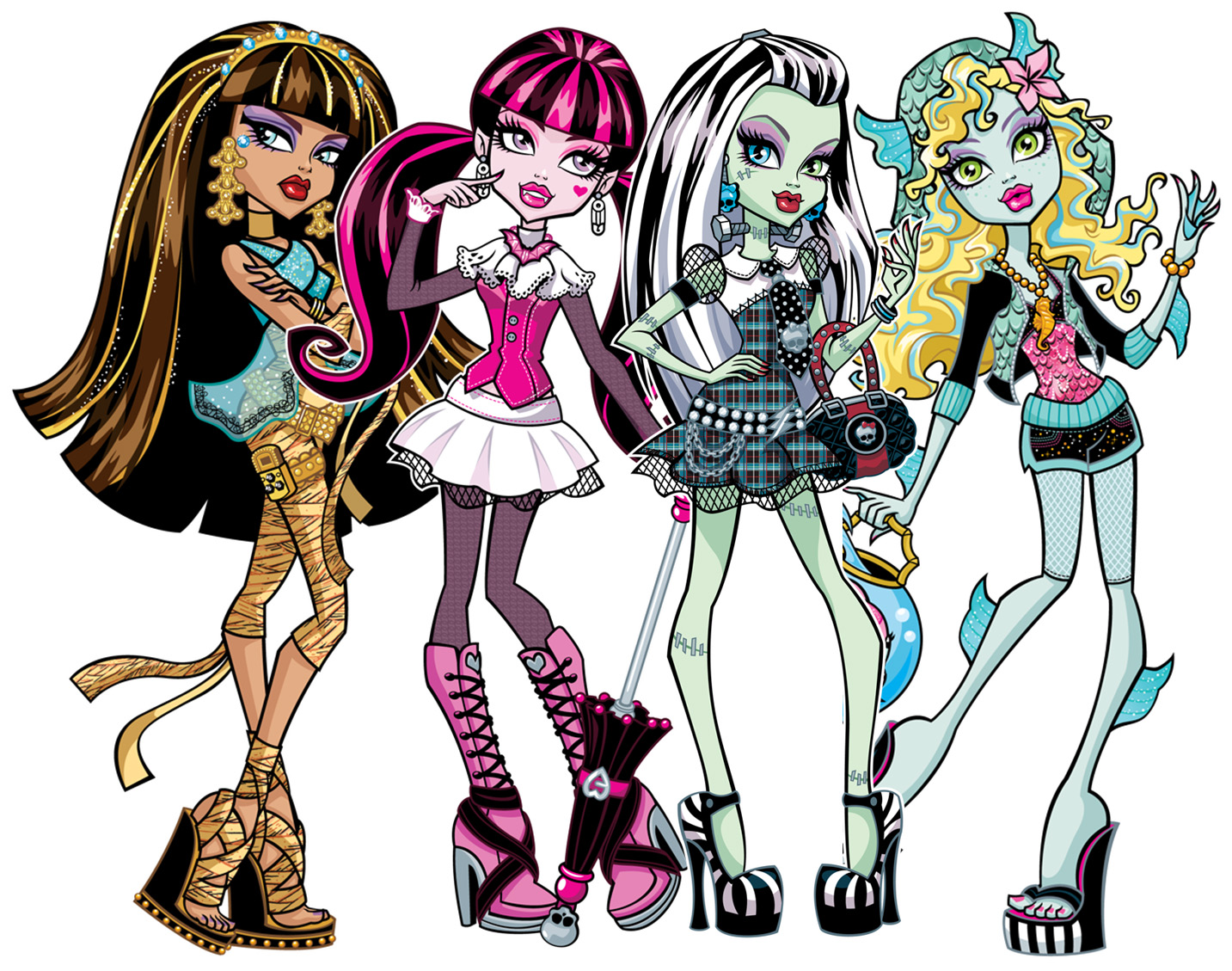
As a kid I liked dolls. Getting a toy from McDonalds, if the choice was the car or the Barbie, I wanted the Barbie. I liked that they had arms and legs that I could manipulate, I was more of an action figure person. Besides McDonald’s, I was never interested in them on my own, but as an adult in 2014, I came across Monster High dolls. The idea is that they’re based on monsters from folklore as teenagers and they each have something with their body they have to deal with. The Frankenstein girl, her body occasionally falls apart. The doll from the black lagoon has a skin condition where she constantly has to moisturize or she dries out. They all have an inconvenience that they have to deal with, they’re just accepted for who they are. For me that’s a very autistic narrative, very living-with-a disability narrative.
Tell me about being a gender-diverse BCBA:
And then when it comes to gender diversity, that comes into effect more with interests…. If my kid likes vacuums, I will bring my vacuum…. If my kid likes fairy tales, mythology, or magic, I will go to the library and get 11 books on fairies, and we’ll just go through them together and pick out our favorite creatures. There have been a couple of times where parents have wanted their kids to stop being interested in what they’re interested in and be interested in something more “gender appropriate.” I had to think about how I would approach this to defend my client without revealing too much about myself. I’m a man working with children and there’s a stigma about men working with children, with queer people working with children, with homosexuals working with children. I feel if I’m revealing too much about myself or not enough, there could be a misinterpretation, they might view me as a danger to their child when I’m just trying to defend them. Fortunately, I haven’t had to deal with it too much.
Tell me about being an autistic BCBA:
Primarily, being autistic is what comes into play when I’m working with the kids, and more often, with the parents when I don’t necessarily come into conflict, but I come in to decisions that need to be made, and how I approach things. When that comes in as a general rule, I never let any parents know that I’m autistic because I don’t want to set myself up as an example of what their kid is going to be or create the illusion that I’m an expert in autism.
So…you are autistic and work to support people who are autistic…but you don’t consider yourself an expert in autism?
The thing is that when I was younger, I tried to be an expert in autism, and I realized how much pressure I was putting on myself, undue pressure, because autism is such a wide thing. I tried to make myself a representative and I realized that it was kind of out of guilt for being autistic, where I was like, “I’m sorry I’m this way, let me be as easy to understand, let me be a lesson.” Only in my adult life did I kind of realize that, so I’m trying to un-do that pattern of behavior.
Because it took a toll on your mental health?
Right. And because it’s stressful. And because it’s not true. No doctor, people assume that an expert knows absolutely everything. And nobody knows everything about autism. We barely understand it. There’s like 400 genes that affect it, and we don’t know how they affect it, they just do. And we know some techniques that we can use to help people learn what they normally would not be able to learn, we know some of the symptoms, but the definition is always changing. Autism is that something you can’t really be an expert in, you can just be knowledgeable.
Sam Krus is a BCBA in Waukegan, IL who practices in Kenosha and Madison, WI. Sam enjoys fashion dolls, podcasts, making costumes, role-playing games, board games, and reading when they have the time and energy.

In September 2020, LEARN convened a group of neurodivergent staff to form our Neurodivergent Advisory Committee. The committee reviews and gives feedback on matters relating to neurodiversity and other person-centered ABA topics and was instrumental in the content, messaging, and visual design of LEARN’s Neurodiversity Values Statement. We asked Ash Franks, a member of the Neurodivergent Advisory Committee, to share her thoughts with us.
Supporting other autistic people while being autistic means listening to what they have to say, however they communicate it, whether it be through an AAC device, sign language, PECS, or verbal language. It also means giving them breaks if they need it, and allowing them to use tools to cope (e.g. stuffed animals, headphones, weighted blankets, etc.). Looking back on my experiences as an autistic child has been very helpful in trying to help children who are at AST.
Being autistic allows me to see different perspectives and ideas compared to neurotypical people, as they tend to think differently than I do.
Basically, we are trying to re-vamp ABA materials through a more neurodivergent-friendly lens, so we can make our treatment as effective as possible. Having autistic people and other neurodivergent people look at ABA therapy through their eyes allows them to explain what works and what doesn’t work. This way, we can work to have treatment be as effective, safe, and as fun as possible for everyone involved. Having BCBAs see the autistic perspective is important because we have direct experience with what worked for us growing up versus what didn’t and might be able to help streamline the treatment to be as effective as possible.
I tend to give feedback on the more artistic and creative side of things, as I am very geared towards having an eye for creative things in the world.
Including autistic people in ABA is super important because we need to account for neurodivergent perspectives to make treatment as effective as possible. Since I am autistic, I can give a firsthand account of what has personally worked for me throughout my life, and what hasn’t. I myself was never in ABA therapy growing up, but I did other types of therapies that I also have found helpful from time to time.
I think listening to autistic perspectives in the workplace would be very helpful. I think having a quiet room for staff that has sensory toys specific for staff would be very helpful, also maybe including a comfy place to sit with a weighted blanket would be good too. Another place it would be helpful to listen to autistic people is when it comes to shopping at malls, since malls can be overwhelming for most autistic people. I know some stores have “quiet” shopping hours where they reduce the lighting and turn off the music, and I really wish more places would do this.
Ash Franks is a Behavior Technician for Learn Behavioral. Ash works in AST’s Hillsboro, Oregon location. Outside of work, she enjoys photography, cooking, video games, and spending time with family and friends.
The sudden disruption in routine due to COVID-19 is challenging for all individuals to manage as we adjust to a new, and hopefully short-lived, normal of staying at home and ceasing most of our regular activities. For families of individuals with autism and other disabilities, the disruption can be especially challenging.
Resources Discussed:
Cosmic Kids Yoga: https://www.youtube.com/CosmicKidsYoga
Raz Kids: https://www.raz-kids.com/
Epic: https://www.getepic.com/
Prodigy: https://www.prodigygame.com/
DreamBox: https://www.dreambox.com/
Out School: https://outschool.com/
Story Time from Space: https://storytimefromspace.com/library/
Bark: https://www.bark.us/
For more helpful tips and resources, sign up for our Parent Newsletter at learnbehavioral.com/parentresources.
All Autism Talk (allautismtalk.com) is sponsored by LEARN Behavioral (learnbehavioral.com).
The sudden disruption in routine due to COVID-19 is challenging for all individuals to manage as we adjust to a new, and hopefully short-lived, normal of staying at home and ceasing most of our regular activities. For families of individuals with autism and other disabilities, the disruption can be especially challenging.
Richie has a conversation with Katherine Johnson, BCBA and founder of Advances Learning Center to share helpful tips and resources for you and family during this time.
Katherine has a Master of Arts degree in Behavior Disorders and Applied Behavior Analysis from Columbia University Teachers College and is a Board Certified Behavior Analyst (Charter Certificant). Katherine has taught in both private and public schools at pre-school and elementary levels and has provided educational consultation services to public schools and home programs. She has taught undergraduate behavior analysis courses at Northeastern University and graduate level courses at Simmons College, has provided parent training through the May Institute, and is on the Advisory Board for the undergraduate psychology program in Applied Behavior Analysis at Regis College. Katherine also currently serves as Vice President of MassCAP.
Resources Discussed:
Go Noodle: https://www.gonoodle.com/
Privilege Points: http://www.privilegepoints.com/
For more helpful tips and resources, sign up for our Parent Newsletter at LearnBehavioral.com/parentresources.
All Autism Talk (allautismtalk.com) is sponsored by LEARN Behavioral (learnbehavioral.com).