
New Autism Learning Center in Appleton, WI, Now Open
October 19, 2026
October 19, 2026
We’re hiring BTs, BCBAs, Clinical Psychologists & More. View open positions



The following is an interview published by Chicago Parent with LEARN Behavioral Chief Clinical Officer Dr. Hanna Rue, Ph.D., BCBA-D.
By: Claire Charlton
Your child likely has the opportunity to build friendships with kids on the autism spectrum. How can you help cultivate these unique relationships?
This back-to-school season, your child is settling into a new routine alongside children of many abilities, and as they are making new friends, now is a great time to encourage them to reach out and build a friendship with a child with autism. Because autism is a spectrum disorder, your child’s classroom, cafeteria, chess club, or ballet class will likely include a child with autism, says Hanna Rue, Ph.D., BCBA-D, Chief Clinical Officer with LEARN Behavioral.
Current statistics show that 1 in 31 children has been identified with autism spectrum disorder (ASD) — for boys, the prevalence is four times higher and numbers vary from state to state, according to data from the CDC. “I’m never surprised when a parent comes to me and says their child has met a peer with typical autism characteristics in the classroom,” says Dr. Rue.
Kids with autism have strengths and challenges just like their neurotypical peers and can bring a lot of value to a friendship. “What I have found is that neurotypical kids are amazed that some kids with autism have the same special interests as they do,” Dr. Rue says. “Maybe they are passionate about zoo animals and can provide all sorts of information that neurotypical kids are impressed by.”
Each child is different and not every child mixes well with groups of peers. A child with autism is often able to look past differences or idiosyncrasies that can put off neurotypical peers, which makes them a good source of friendship for kids who struggle to fit in, Dr. Rue says.
While it may appear that kids with autism prefer to play alone, they really do enjoy companionship and sharing their interests with others. Here, Dr. Rue shares some wisdom about how to help your child build friendships with kids with autism.
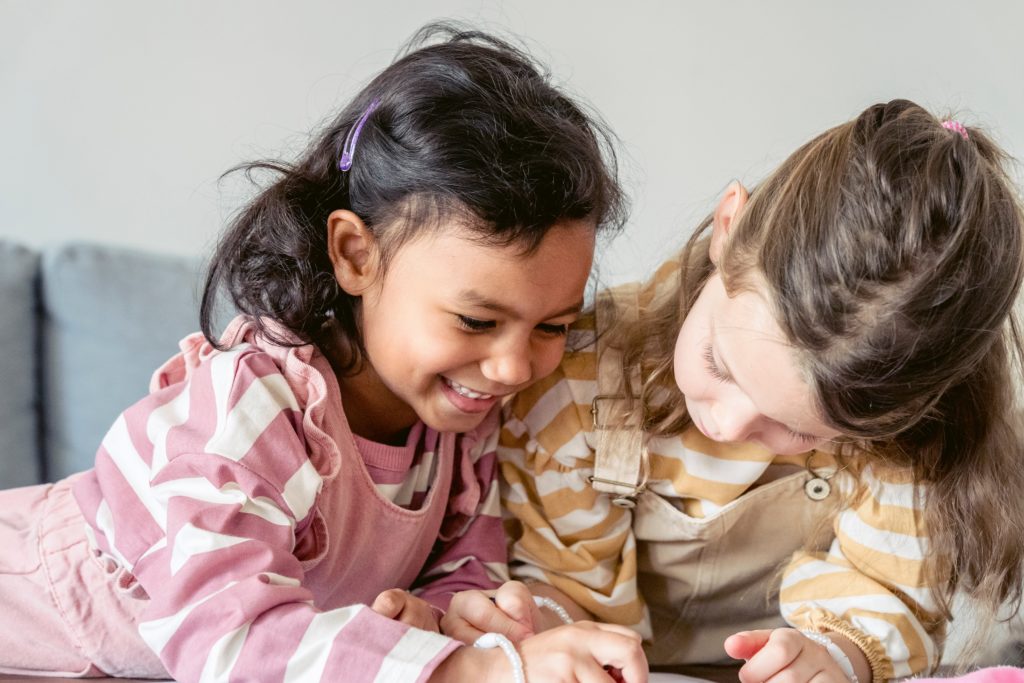
A child with autism may experience sensory sensitivities that neurotypical peers can empathize with. Loud noises, loud music, bright lights, even transitioning between activities can present challenges for some children.
“Sometimes a child with autism has challenges with communication and that can cause distress on either side,” Dr. Rue says. “I always tell folks if they are working with kids to develop friendships to allow for plenty of warm-up time.”
When planning a playdate, take it slow. Show your child’s new friend a quiet room in your home where they can take a break if needed, and recognize that if they take this break, it likely signals that they are overwhelmed, not disinterested. Communicate to your own child that everyone is frightened or overstimulated by something at some point and help them recognize their own fears or needs.
“I have seen some amazing pure human kindness across developmental stages,” says Dr. Rue. “When a child with autism has a meltdown, their friend can just sit and be in close proximity. They recognize independently that their friend is having a hard time. Or they assist with transitions through prompts like ‘follow me, sit at my table for lunch, hold my hand so you don’t get lost.’ Kids are pretty intuitive and can recognize that just being there and showing the way is a huge help.”
Parent encouragement can help blossoming friendships grow. Here’s what parents can do to support their children as they make and sustain friendships with kids with autism.

When a parent is aware of their own child’s developmental level, they are better prepared to help them make friendships with anyone — and be inclusive on the playground and in the classroom, Dr. Rue says. This is best achieved by talking about differences on a regular basis.
“It’s important to introduce your child to diversity, especially if you live in an area where there isn’t a lot of diversity,” she says. “Read books, watch videos, and have open conversations about differences. In addition to talking about skin color, you can talk about different ways that kids communicate with each other, including the idiosyncrasies of flapping, body rocking, and squealing because this is a way of expressing joy or frustration.”
“We always have lots of opportunities to interact with other humans in our communities, from the playgrounds to the grocery stores,” Dr. Rue says. “This is the time to model appropriate interactions and show empathy, and then discuss it with your child.”
For younger kids, Dr. Rue is a big fan of Sesame Street’s inclusion of a character named Julia. “Julia has autism and I love for parents of neurotypical kids to watch Sesame Street with younger children and talk about Julia and how she is different. It’s a great opportunity for a shared moment of watching and talking about differences and acceptance.”

Parenting a child with autism is stressful. “Research suggests that they experience more stress on a daily basis than parents of a child with a terminal illness. That’s a lot. Any small gesture, like saying hi or offering coffee or even just sitting and listening. Being an ear is very helpful,” Dr. Rue says.
Finally, have patience. Playdates can be easy but allow time for your child and their new friend to experience similar interests over a few visits. Help the other parent know that you understand and won’t give up after one meltdown or challenge.
“It’s so important to recognize that individuals with autism are all around us, doing great things,” says Dr. Rue. “We need to embrace that and learn about how to be supportive.”
For more school-related content, check out our blogs, “Five Steps to Help Your Child with Autism Make Friends” and “Back to School: Homework Tips.”
In this episode we are joined by three dynamic women who share their perspectives on how to best care for yourself and your family while raising a child with autism. Arfa Alam, a first generation Muslim American with neurodiverse family returns to share her wisdom and passion with us. Heather Link is a clinical Director who shares her experiences of both providing services and receiving services for her own family. Liza Hellenbrand is the mother of a thriving, 21 year old son with autism who also hosts the Empowered Caregiver podcast. Join this powerful women’s circle as they share from different backgrounds and experiences to offer sage advice to other moms.
For more information:
https://podcasts.apple.com/us/podcast/the-empowered-caregiver
All autism talk (allautismtalk.com) is sponsored by LEARN Behavioral (learnbehavioral.com).
When it comes to parenting, the unknown can be one of the hardest parts. Worries creep in if you suspect something’s wrong with your child’s development. If you think your child may be showing signs of autism, there’s no guidebook to tell you what to do next.
It’s natural to feel overwhelmed. The process gets easier when you know what to expect.
If you’ve found your way to this post, you’ve likely taken the first step: questioning whether your child shows signs of autism.
Recognizing this possibility is a significant and sometimes challenging move. Rest assured, you’re not alone. This guide is here to provide you with valuable insights and support as you navigate through this process.
Autism spectrum disorder (ASD) affects how a person interacts, learns, and behaves. Everyone on the spectrum is different. Signs of autism usually start showing up when a child is very young.
Autism symptoms can be different for everyone. If your child is not growing or learning like other kids their age, or if they have any of the following signs, you might want to talk to your pediatrician:
Getting a diagnosis of autism starts with an evaluation. Experts will examine how a child behaves and will look at their past development. If your child’s pediatrician thinks it might be autism, they’ll send your child to an expert for a closer look. This process includes:
After an autism evaluation, our team of specialists will review and interpret the results. If your child is diagnosed with autism, our team will work with you to create a personalized treatment plan. This plan includes therapies to help improve communication, social skills, and behavior.
At LEARN, we work with families on a plan tailored to your family’s needs. We will adjust the treatment plan as needed. We’ll also provide you with resources and support.
Whether you’re just noticing signs or you’re already deep into the diagnosis process, our team is here to help. We know that recognizing and diagnosing autism can be challenging. But with the right support and guidance, you can navigate it confidently.
Devon Sundberg, M.S., BCBA is the founder of the groundbreaking (and long overdue) Women in Behavior Analysis Conference (WIBA). Devon shares how raising three daughters helped open her eyes to how gendered life can be (including party food). Having previously founded an ABA company (BACA) with her husband, Devon was acutely aware of the need for more awareness of the women in her field. Devon shared, “The research shows, this is a field full of women and yet we haven’t received the professional appointments or the awards or been invited presenters at the Ph.D. level.” This year at the 5th WIBA conference(July 29-31), will include inductees to the Women in Behavior Analysis Hall of Fame.
For More Information:
https://thewiba.com/
https://www.facebook.com/womeninbehavioranalysis/
https://www.instagram.com/wiba_conference/
https://twitter.com/WomeninBA
https://www.linkedin.com/company/women-in-behavior-analysis/
All Autism Talk (allautismtalk.com) is sponsored by LEARN Behavioral (learnbehavioral.com).