The WIBA Conference, short for Women in Behavior Analysis, is the only annual conference in the ABA field dedicated to empowering, celebrating, and mentoring women in behavior analysis and highlighting their contributions to the discipline. Founded in 2017, WIBA has grown into one of the most distinctive and community-driven events on the ABA conference calendar.
Each year, the WIBA Conference brings together BCBAs, researchers, educators, students, and allies from across the behavior analysis community to engage in meaningful dialogue on gender equality, professional development, mentorship, and the advancement of the field.
What sets WIBA apart is its dual purpose: to advance behavior analysis as a science and to actively address the underrepresentation and underrecognition of women within it. The conference is open to all genders and is designed to be an inclusive forum where every attendee, whether a seasoned clinician, a graduate student, or an organizational leader, feels seen, supported, and inspired.
When is the WIBA Conference?
The WIBA Conference is typically held each summer, most often in July. The event rotates among cities across the United States. Attendees are encouraged to check the official WIBA events page for the most current schedule, registration details, and hotel booking information.
WIBA is offered as a hybrid event, with both in-person attendance and a live virtual stream available each year. On-demand access is also included, allowing attendees to engage with sessions at their own pace after the event.
2026 WIBA Conference: Chicago, Illinois
July 15–17, 2026 | Sheraton Grand Chicago Riverwalk
The 9th Annual WIBA Conference will be held July 15–17, 2026, at the Sheraton Grand Chicago Riverwalk in Chicago, Illinois. The conference is a hybrid event, offering both in-person attendance and a full virtual livestream for those who cannot travel.
This year’s program will highlight prominent women in behavior analysis while addressing the importance of gender equality and diversity within the field. Through engaging presentations, meaningful discussions, and structured opportunities for connection, the 2026 WIBA Conference creates space for learning, leadership, and shared progress.
2026 WIBA Hotel and Accommodations
The 2026 WIBA Conference is hosted at the Sheraton Grand Chicago Riverwalk in Chicago, Illinois. The WIBA discounted room rate is available through June 20, 2026. Rooms are expected to sell out, and early booking is strongly recommended. A hotel booking link is provided through the official registration process at thewiba.com.
Registration for the 2026 WIBA Conference
Registration is available both in-person and online. Registration tiers are offered at the same price and include on-demand access and continuing education units (CEUs).
Continuing Education at the 2026 WIBA Conference
WIBA offers both CEUs and professional development units (PDUs) with all registration packages. CEU and PDU access is included for both in-person and virtual attendees, as well as through on-demand viewing after the conference.
Find the Next Step in Your ABA Career
Discover rewarding BCBA career opportunities at LEARN Behavioral.
What Does LEARN Behavioral Do at WIBA?
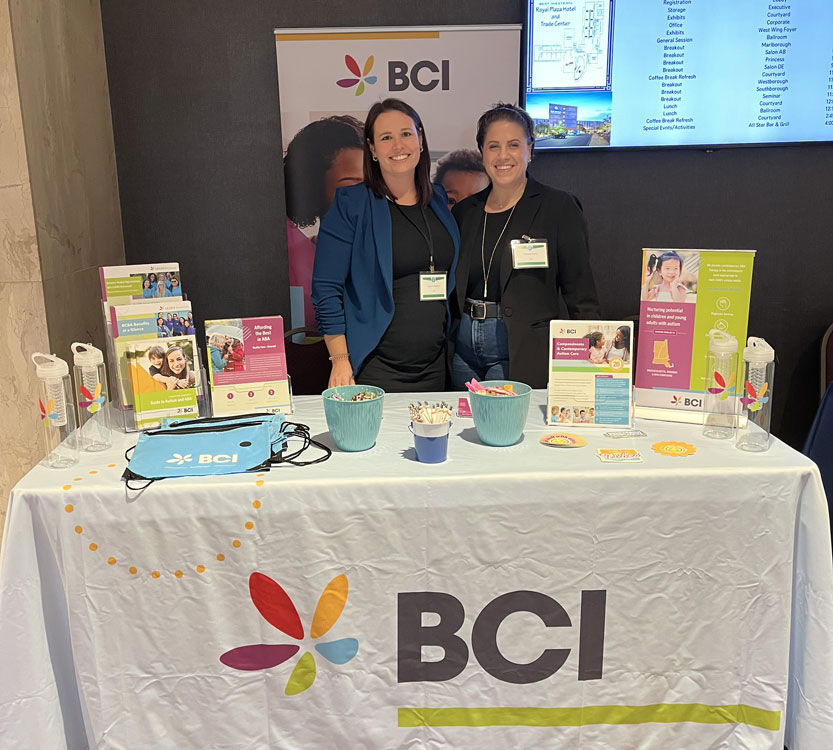
LEARN Behavioral participates in the WIBA Conference as a supporter of professional development and community in the ABA field. The LEARN team attends the conference each year to engage with the conversations shaping the future of behavior analysis, particularly those focused on mentorship, leadership, and inclusion, and to connect with the talented clinicians and researchers who make up the WIBA community.
At the WIBA Conference, LEARN Behavioral typically:
- Connects with BCBAs, students, and early career professionals who are passionate about growing in the field
- Engages with sessions focused on mentorship, leadership development, and diversity, equity, and inclusion (DEI) in ABA practice
- Supports career development opportunities for women and allies who want to build meaningful careers within a national ABA organization
- Participates in community-building events that align with LEARN’s commitment to inclusion and belonging across its clinical teams
- Explores research and best practices that can be applied to LEARN’s work with children and families across the country
LEARN Behavioral’s participation in WIBA reflects its belief that a stronger, more equitable field of behavior analysis is better for the professionals who work in it and the children and families they serve.
Who Attends the WIBA Conference?
The WIBA Conference draws a wide and diverse audience united by a shared interest in advancing behavior analysis and championing equity within the field. Attendees typically include:
- Board certified behavior analysts (BCBAs) and BCBA-Ds
- Board certified assistant behavior analysts (BCaBAs)
- Registered behavior technicians (RBTs)
- Graduate students and doctoral candidates
- University faculty and researchers
- Early career professionals seeking mentorship and community
- Organizational leaders and clinical directors at ABA therapy organizations
- Allies of all genders committed to gender equity in behavior analysis
- Advocates and professionals working at the intersection of ABA and social justice
While WIBA was founded to address the specific experience of women in behavior analysis, the conference is explicitly open to and welcoming of attendees of all genders. Allies play an important role in the WIBA community, and the conference is designed to foster dialogue that benefits the entire field.
Start a Meaningful Career in ABA
Interested in a career helping children with autism? Discover rewarding ABA career opportunities.
Topics Discussed at the WIBA Conference
The WIBA Conference program spans clinical science, professional development, and social dialogue, with presentations, workshops, poster sessions, and mentoring opportunities woven throughout the schedule. Presentations are selected through a blind review process, and all invited speakers receive equal compensation; there are no keynote hierarchies at WIBA.
Key topics consistently featured at the WIBA Conference include:
- Highlighting the contributions of prominent and historically underrecognized women in behavior analysis
- Gender equity, representation, and leadership in the field
- Mentorship for early-career professionals and students
- Organizational behavior management (OBM) and leadership development
- Diversity, equity, and inclusion (DEI) in clinical practice and research
- Social justice and culturally responsive behavior analysis
- Research trends and innovations in the field
- Professional development and career navigation for behavior analysts
- Work-life balance and burnout prevention for clinicians
- Ethics in research and practice
- Intersectionality and identity in the behavior analysis community
- Recognition and preservation of the field’s female founding voices
Why Should You Attend the WIBA Conference?
Whether you are an experienced BCBA, a graduate student just entering the field, or a clinical leader at an ABA organization, the WIBA Conference offers something that no other ABA event does. Specific reasons to attend include:
- Experience the only ABA conference built around gender equity, mentorship, and women’s leadership in the field
- Earn CEUs and PDUs included with all registration packages, in-person and virtual
- Participate in formal mentorship sessions connecting early career professionals with established leaders in behavior analysis
- Network with thousands of BCBAs, researchers, educators, and students who share your values
- Engage with research and presentations selected through a blind review process for rigor and fairness
- Access sessions on-demand after the conference, making it easy to revisit content at your own pace
- Join a community that extends beyond the conference through WIBA Skool, the organization’s year-round online platform
- Attend in person in Chicago or join virtually from anywhere in the world
Highlights from Past WIBA Conferences
Since its inaugural conference in 2017, WIBA has grown from a grassroots gathering into one of the most impactful and widely attended events in the ABA calendar. Over nearly a decade, it has accumulated more than 4,000 in-person and online attendees, 648 presentations, 453 presenters, and 85 mentorship sessions.
Past WIBA Conference highlights include:
- The launch of the WIBA Hall of Fame in 2021, dedicated to honoring the female pioneers whose contributions to behavior analysis have often gone unrecognized, with inaugural inductees including Eve Segal, Bea Barrett, Martha Bernal, and Judith Favell
- Annual formal mentorship sessions pairing early career professionals and students with established leaders in the field, including invited speakers and advisory board members
- Expert panel sessions where advisory board members and invited speakers answer attendee questions and share professional advice
- Presentations by world-renowned behavior analysts, including Linda LeBlanc, PhD, BCBA-D, and other leaders on the WIBA Advisory Board
- Scholarship programs designed to reduce financial barriers and expand access to the conference for underrepresented professionals
- A growing emphasis on intersectionality, social justice, and culturally responsive behavior analysis
- The development of WIBA Skool, an online community platform that keeps the WIBA experience alive year-round between annual conferences
WIBA Conference Key Takeaways
- The WIBA Conference is the only annual event in the ABA field dedicated to empowering, celebrating, and mentoring women in behavior analysis
- WIBA was founded in 2017 and has grown to engage thousands of attendees, presenters, and mentors across its history
- The 9th Annual WIBA Conference will be held July 15–17, 2026, at the Sheraton Grand Chicago Riverwalk, with in-person and virtual attendance options
- The conference is open to attendees of all genders and is designed as an inclusive forum for advancing equity and excellence in the field
- CEUs and PDUs are included with all registration packages, in-person and online
- Topics span gender equity, mentorship, DEI, leadership, OBM, clinical trends, and the recognition of women’s historic contributions to behavior analysis
- LEARN Behavioral participates in WIBA each year as a member of the ABA community committed to inclusion, mentorship, and professional development
FAQs: What People Ask About the WIBA Conference
Is the WIBA Conference only for women?
No. While WIBA was founded to highlight the accomplishments of women in behavior analysis and address gender equity in the field, the conference is explicitly open to attendees of all genders. Allies play a central role in the WIBA community, and the conference welcomes anyone committed to advancing gender equality and inclusive practice in behavior analysis.
When was WIBA founded?
WIBA was founded in 2017 by Devon Sundberg, MS, BCBA, and Kimberly Zoder-Martell, PhD, BCBA-D. The idea originated while both were involved in organizing a state-level ABA conference and recognized the lack of female representation among invited speakers at ABA events. The inaugural WIBA Conference was held that year to highlight women’s accomplishments in the field and create space for mentorship and gender equity dialogue.
Who founded WIBA?
WIBA was co-founded by Devon Sundberg, MS, BCBA, and Kimberly Zoder-Martell, PhD, BCBA-D. Devon Sundberg serves as Executive Director and Conference Director. Janet Lund, PhD, BCBA-D, currently leads the organization, and WIBA’s Advisory Board includes Linda LeBlanc, PhD, BCBA-D, Chata Dickson, PhD, BCBA-D, Patricia Wright, PhD, BCBA-D, Adrienne Bradley, MEd, BCBA, and Bruce Tinor, PhD, BCBA.
What is the WIBA Hall of Fame?
The WIBA Hall of Fame was established in 2021 to honor women who have made outstanding contributions to the field of behavior analysis, particularly those whose work has been historically overlooked or underrecognized. Inductees are selected annually and recognized at the WIBA Conference. The inaugural Hall of Fame class included Eve Segal, Bea Barrett, Martha Bernal, and Judith Favell. Induction profiles are published annually in the journal Behavior Analysis in Practice.
What is WIBA Skool?
WIBA Skool is WIBA’s year-round online community platform where behavior analysts, students, and allies can stay connected between annual conferences. It functions as a private professional community (without ads) where members can share resources, engage in discussions, and maintain the momentum and connections built at the WIBA Conference. WIBA Skool is separate from and complementary to the annual in-person and virtual event.
Does WIBA offer scholarships?
Yes. WIBA offers scholarships designed to reduce financial barriers and make the conference more accessible to professionals who might otherwise not be able to attend. Scholarship opportunities are announced through WIBA’s official channels. The organization is committed to expanding access to underrepresented professionals and prioritizes inclusion in its scholarship and speaker selection processes.
What types of continuing education does WIBA offer?
WIBA provides both continuing education units (CEUs) and professional development units (PDUs) as part of all registration packages. This makes WIBA one of the few ABA conferences to offer PDUs alongside BACB-relevant CEUs, extending its value to a broader range of professionals in education, leadership, and adjacent fields. CEUs and PDUs are available to both in-person and virtual attendees, as well as to those who view on-demand sessions.
How is the WIBA Conference different from ABAI or CalABA?
ABAI and CalABA are broad-scope conferences covering the full range of behavior analysis science, research, and clinical practice. WIBA has a distinct and focused mission: advancing gender equity in behavior analysis, mentoring women and early career professionals, and recognizing the historic and ongoing contributions of women in the field. It is the only ABA conference where gender equity and women’s leadership are central to the entire program, not just a track or a session, but the organizing principle of the event itself.