5 Sensory-Friendly Activities for Families Near Las Vegas, NV
November 20, 2026
We’re hiring BTs, BCBAs, Clinical Psychologists & More. View open positions


FEATURED POSTS



Dr. Ellie Kazemi is the Chief Science Officer at Behavioral Health Center of Excellence (BHCOE), an accrediting organization focused on improving the quality of behavior analytic services. She is also a professor at CSUN, where she founded the M.S. in Applied Behavior Analysis (ABA) program. Dr. Kazemi joins us to share about the accreditation process and the importance of assessments and measuring outcomes in the field of ABA. As Dr. Kazemi discusses the value of connecting the perspectives of the families and the clients, and shares, “To measure outcomes you should see progress from different perspectives”.
For More Information:
All Autism Talk is sponsored by Learn Behavioral.
With over 20 years of experience providing compassionate, contemporary ABA therapy to children with autism, we’re delighted to share that we opened a new Trellis Learning Center this fall in Forest Hill, Maryland. The new center held an open house that included an official ribbon-cutting with their local Chamber of Commerce and opportunities for families to tour the facility, speak with the leadership team, and participate in fun activities. This new location offers a supportive, learning-rich environment where children with autism can work on individual skills in a group setting.
We couldn’t be more excited to support more families in the communities we serve. To learn more about where our services are located, find a location.


A board certified behavior analyst (BCBA), managing technician, at LEARN’s Autism Spectrum Therapies (AST) in California’s Inland Empire region, Joshua Polanco provides supervision and behavioral intervention plans for clients in need of ABA services. He earned a master’s degree in psychology and ventured into ABA because he wanted to use that degree in a more direct and meaningful way. He’s also legally blind.
Here, he shares stories from his journey and experience working with children and young adults with autism—and his take on the importance of diversity, equity, and inclusion (DEI) in the field of applied behavior analysis (ABA).
A: I was working as a behavioral technician and providing one-to-one services with multiple clients. I was about to quit after the first two weeks of working in the ABA setting because I did not have any experience with children with disabilities and felt like I was not helping my clients. Ironically, the clients and their families are what made me stay. To me, nothing can beat the sensation of knowing you have made a difference in someone’s life, and I have had so many fun experiences that helped me realize the importance of ABA, and how prevalent it is in our everyday lives. All of these experiences are what drove me to continue pursuing ABA to the position where I am now.
A: Everything. I feel these concepts as a whole are very overlooked at times. It’s not only important to have diversity, equity, and inclusion in the workplace but to also recognize the benefits provided when DEI is incorporated into a work environment. In my case, I may be legally blind, but that does not make me useless in a work environment that relies heavily on vision. I am able to continue to make an impact on peoples’ lives through my work and can actually provide a different perspective and understanding when helping clients or co-workers because of my loss of vision.
A: Trying to comprehend various interactions that take place. Balancing the state of empathy and understanding, while simultaneously needing to support and accomplish work objectives that need to be achieved.
A: The short, easy answer is that I take a step back and just listen. Self-awareness and self-control over your own biases and habits go a long way. It’s important to me to recognize the limitations you have in the moment. For example, you may not always be able to truly understand the perspective of others. This is OK—we are only human. I feel like there are ways to still attempt to understand to some degree. Failure to truly understand someone should not give us permission to disregard their perspective.
I’ve relied, to some degree, on multiple psychology books, articles, and notes from when I obtained my master’s degree in psychology, with an emphasis in clinical counseling and marriage and family therapy. When communicating with colleagues and clients, I always try to review and remember the concepts I learned on the dynamics of communication, including those on cognitive distortions and positive feedback loops. Understanding these can play a huge role on how I understand and communicate during a conversation.
A: Without DEI, we would be refusing to grow ABA as a whole. ABA is a science that expands to more than any one individual population. Part of everything we do is to help, expand, and make a difference in the world. What better way to accomplish this than to recognize the different things people have to contribute.
A: One poignant instance in which I had to advocate for myself is the moment I was officially diagnosed blind, and I had to reach out to the HR department to figure out some resolutions and next steps forward. Luckily, I was part of a supportive team and was able to continue doing the core work I was educated to do and hired for, with some slight accommodations and adjustments.
A: I do not know how many people know that I am legally blind. My condition is called Retinitis Pigmentosa (RP). There is no treatment. With this condition, my vision will gradually worsen. There is no telling how much vision I will lose tomorrow…or over the next 30 years. I don’t only have to think about how this affects the work I do with clients but how I adjust my everyday life to prepare for this. Through my work with rehabilitation specialists, I am learning to use technology, to read braille, and even to cook without looking.
A: I was diagnosed legally blind less than a year ago. In that time, I’ve taken and passed the BCBA exam, which was the first test I’ve ever had to study for and take without my vision, while finding ways to balance my work, as I learn a new lifestyle. I hope the message from all of this is one of inspiration—that no matter how bad things may seem, it’s important not to let the events around you, define you. Take control of the things you can, adapt, and persevere through the adversity. Because this is what we ask of our clients each day.
For more from our Spotlight on Diversity in ABA series, read “An Interview with Angela Parker.”
With over 10 years of experience providing compassionate contemporary ABA therapy to children with autism, we’re delighted to share that we opened a new SPARKS Learning Center this fall in Manassas, Virginia. The new center held an open house that included an official ribbon-cutting with their local Chamber of Commerce and opportunities for families to tour the facility, speak with the leadership team, and participate in fun activities. This new location offers a supportive, learning-rich environment where children with autism can work on individual skills in a group setting.
We couldn’t be more excited to support more families in the communities we serve. To learn more about where our services are located, find a location.
With over 10 years of experience providing compassionate, contemporary ABA therapy to children with autism, we’re delighted to share that we opened a new BACA Learning Center this fall in Indianapolis, IN. The new center held an open house that included an official ribbon-cutting with their local Chamber of Commerce and opportunities for families to tour the facility, speak with the leadership team, and participate in fun activities. This new location offers a supportive, learning-rich environment where children with autism can work on individual skills in a group setting.
We couldn’t be more excited to support more families in the communities we serve. To learn more about where our services are located, find a location.
With over 25 years of experience providing compassionate, contemporary ABA therapy to children with autism, we’re delighted to share that we opened two new WEAP Learning Centers this past summer and fall in West Bend and Janesville, Wisconsin. Each new center held an open house that included an official ribbon-cutting with their local Chamber of Commerce and opportunities for families to tour the facility, speak with the leadership team, and participate in fun activities. These new locations offer a supportive, learning-rich environment where children with autism can work on individual skills in a group setting.
We couldn’t be more excited to support more families in the communities we serve. To learn more about where our services are located, find a location.
By: Katherine Johnson, M.S., BCBA
Senior Director of Partnerships, LEARN Behavioral
Vaccination visits can be terrifying for an autistic child – a new environment, unfamiliar sounds and smells, being touched by a stranger, and all of this culminating in a painful poke. Anxiety and unwillingness to sit for a vaccine shot can lead to parents and medical professionals winding up with a difficult decision: hold the child down against their will or forego the vaccine. At LEARN, we care about our clients’ health and the experience they have when receiving healthcare.
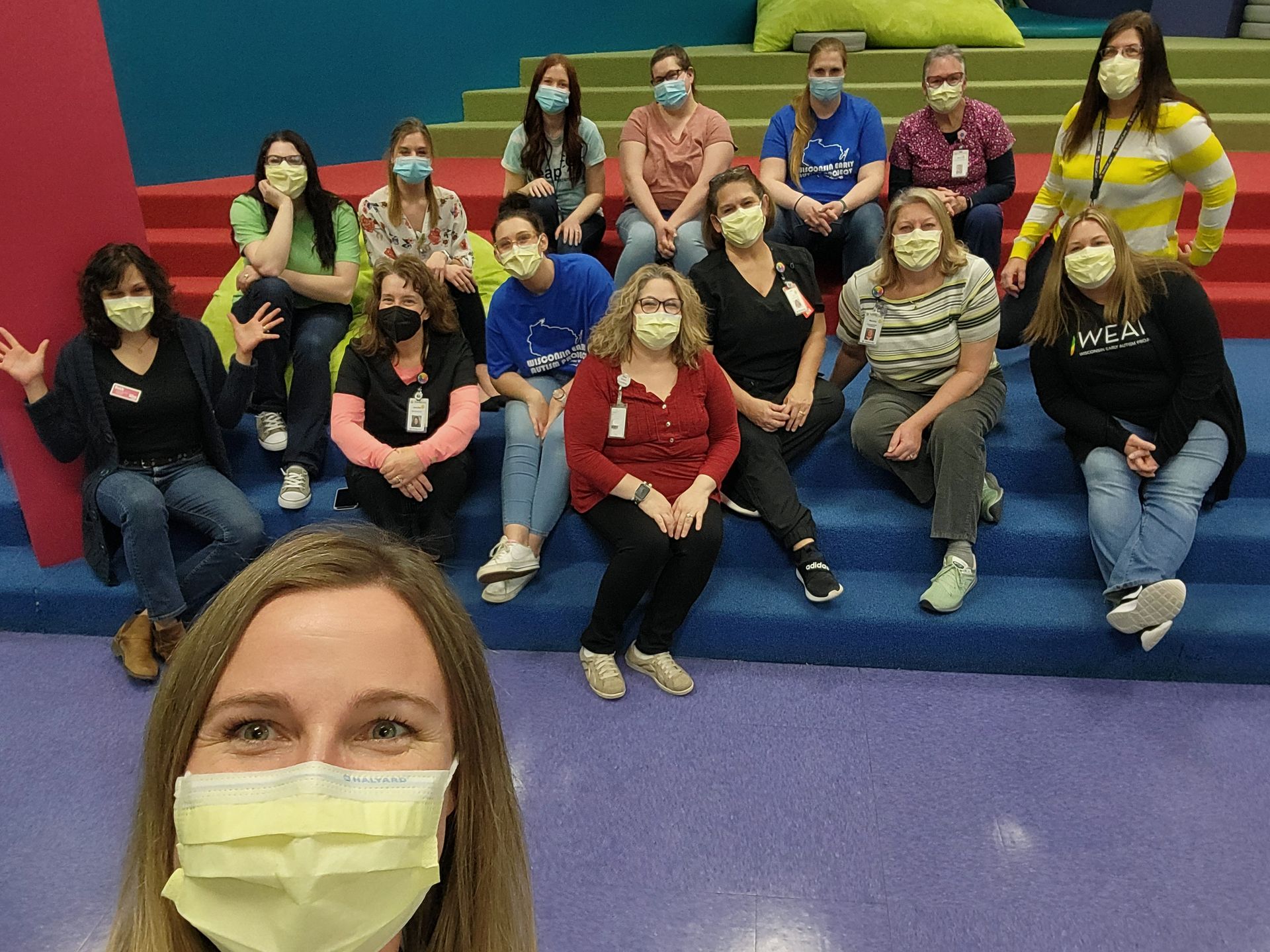
Recently, the Wisconsin Early Autism Project (WEAP, a LEARN organization) partnered with the Autism Society of Greater Wisconsin in a series of vaccine clinics. These events were carefully designed to provide families with autistic children a positive experience while receiving their COVID-19 vaccines.
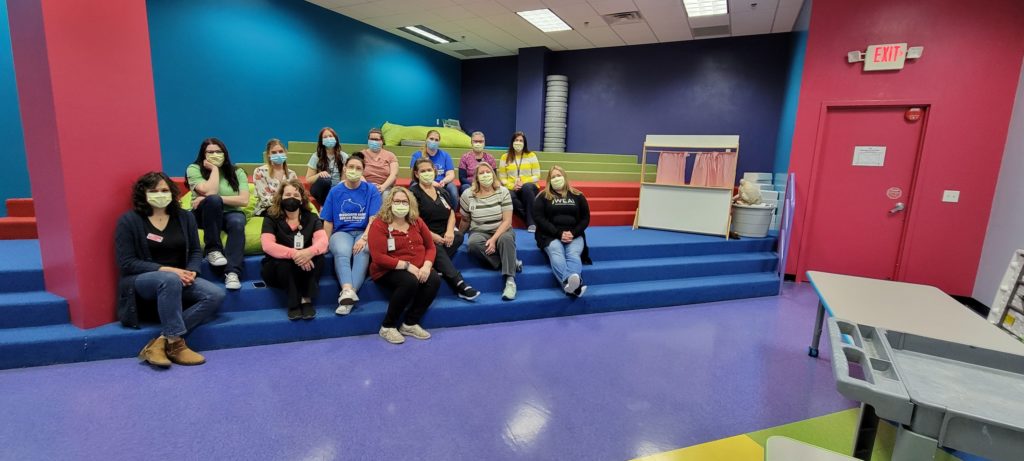
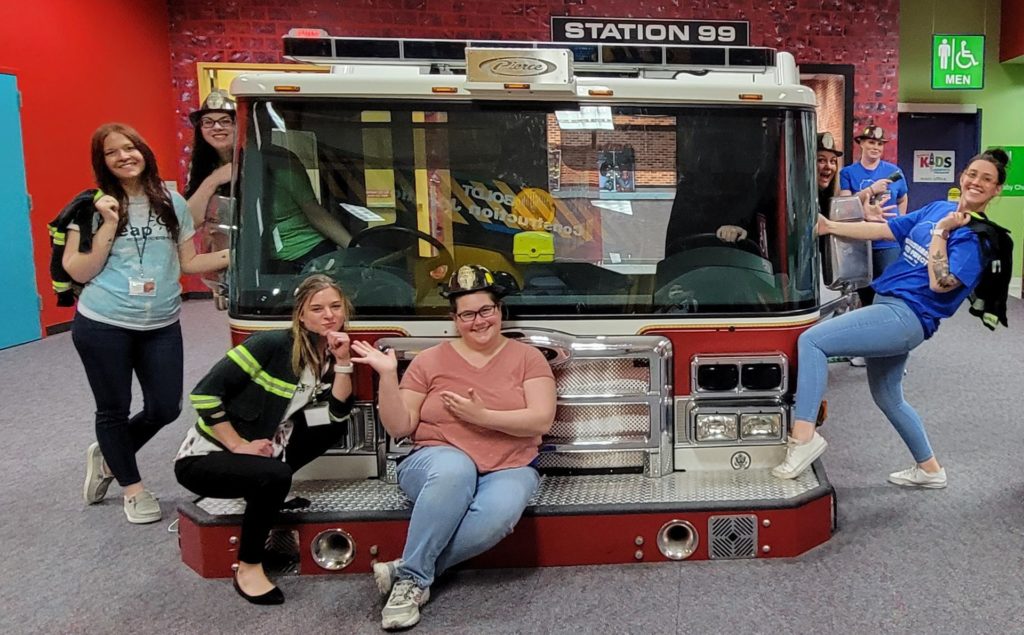
The clinics were held in a local children’s museum, and a pair of seasoned clinicians teamed up with each child, who had reviewed a vaccination social story before coming. Parents answered a questionnaire about their child’s experience with shots and specific interests in advance; clinicians used this information to build rapport with the child, make them comfortable, and provide distraction. Choice was built into the entire experience: children got to select toys, the type of bandage they received, and the body part where they would receive the shot. Clinicians also provided non-invasive devices to mitigate injection pain, like the Buzzy pain blocker, and shot blockers. The most intriguing part? Clinicians waited until the child indicated they were ready before giving them the vaccination.
The result was phenomenal: dozens of autistic children receiving their COVID-19 vaccine without a tear. Kerry Hoops, our Clinical Director at WEAP, said that one experience in particular stood out to her: a boy who was terrified that the shot would hurt, asking about it repeatedly. After assuring him they would not let the shot be a surprise, they spent some time doing one of his favorite activities: having races around the museum. They gave him the opportunity to watch his mother get the vaccine, and then took him to a sensory room in the facility where they watched wrestling (WWE) together. Getting him comfortable was a process that took nearly an hour, but the end result was a child who received his vaccine willingly, and left having had a positive experience. “The coolest thing is seeing the parents’ responses,” said Hoops. “They were so happy because they were not expecting the vaccination experience to go as well as it did.”
The procedures Hoops and our other clinicians at LEARN used are all evidence-based practices commonly used in applied behavior analysis (ABA) called “antecedent interventions.” Frequently, interfering behaviors (like screaming or bolting from a doctor) occur because the child is trying to escape from something uncomfortable or scary. Antecedent interventions are meant to create an environment that the child doesn’t want to escape from. “We’re trying to create a positive experience so when they go in for their next vaccine, they’re not going to be afraid,” says Hoops.
The most groundbreaking component of these vaccine clinics was it was not the medical professional who decided when it was time for the shot, nor was it the parent. It was the child. In addition to using antecedent interventions, our WEAP clinicians also had the medical professionals hold off on the procedure itself until the child had indicated they were willing to receive the vaccine – something known as “gaining assent.”
Assent, having a pediatric patient agree to treatment, is a practice that has been required for medical research since 1977, citing the need to respect children as individuals. Since then, some practitioners have extended assent procedures to their regular pediatric practice, asking for the child’s permission before they listen to their heart, for instance. The new BACB ethics code includes a provision for “gaining assent when applicable,” and proponents argue that Assent-Based ABA prevents difficult behavior and teaches children critical self-advocacy skills. The ability to determine what is and is not comfortable and acceptable for oneself is particularly important for children who struggle to use language, or who are at higher risk of being misunderstood because they are autistic. At LEARN, Assent-Based Programming is one part of our overall Person-Centered ABA Initiative.
Although Assent-Based practice doesn’t guarantee that every child will eventually agree to the procedure (2 children of the 73 children in the clinic did not assent to the vaccine), it was overwhelmingly successful. The impact was evident in the enthusiastic responses from parents afterward. One parent wrote, “Thank you for the BEST vaccination experience ever! Our family was overjoyed to have been part of this clinic.”
LEARN is proud to announce that WEAP and ASGW are planning on expanding their vaccine clinics to regular children’s vaccines in the coming year. For more information, check out the ASGW’s website.
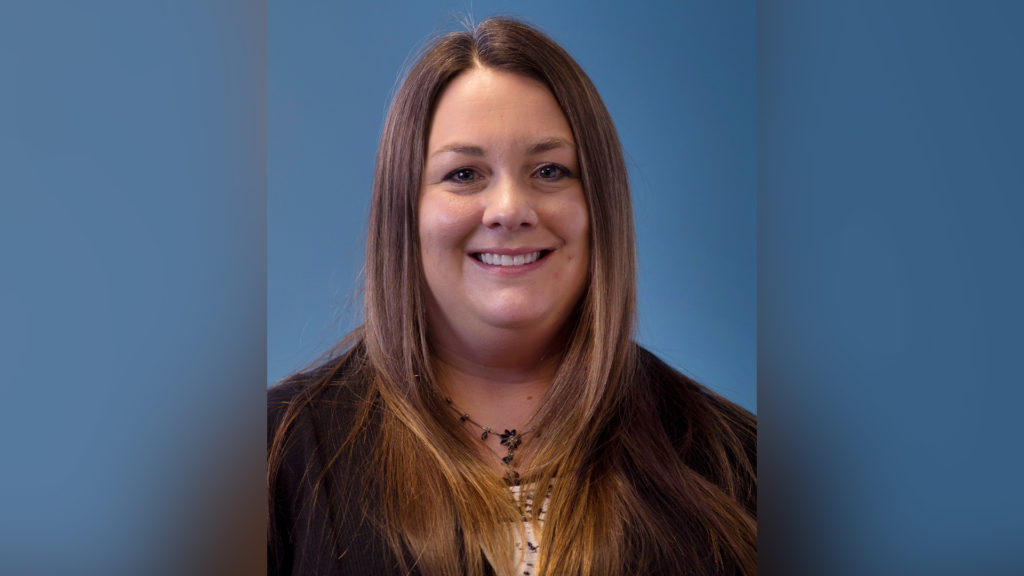
Kerry Hoops, MA, BCBA, is the clinical director for Wisconsin Early Autism Project’s Green Bay region. Kerry began her career helping children with autism over 20 years ago when she was attending UWGB for her bachelor’s in psychology and human development. She fell in love with the job and chose to work in the field of autism as her career. Kerry furthered her education at the Florida Institute of Technology and Ball State University with a master’s in applied behavior analysis and became a board certified behavior analyst (BCBA). She loves helping children and families in Wisconsin and internationally in Malaysia. Kerry also works at the Greater Green Bay YMCA for the DREAM program, focusing on events for socialization for adults with special needs. She has been on the board of directors for the Autism Society of Greater Wisconsin since 2014 and is the acting president.
LEARN more about LEARN’s Person-Centered ABA Initiative. And, to stay connected, join our newsletter.
Sara Litvak, Founder & CEO of Behavioral Health Center of Excellence, the only ABA-specific accrediting body joins us to discuss the different ways quality is measured in the accreditation process. This discussion delves into the importance of not only clinical standards but the needs of clients and their families. As Sara shares, “We are here as a support for parents who are receiving ABA. We aim to ensure their needs are protected and that all patients get excellent care.”
For More Information:
https://www.bhcoe.org/resources/
https://www.facebook.com/BHCOE
https://www.instagram.com/bhcoe/
All Autism Talk (allautismtalk.com) is sponsored by LEARN Behavioral learnbehavioral.com
By Katherine Johnson. M.S., BCBA
Senior Director of Partnerships, LEARN Behavioral
Are you working to become a better ally to the autistic and neurodivergent folks in your community? The surest way to be an effective ally is to reach out to autistic/neurodivergent people to ask how they would like your allyship. If you’re preparing for this type of conversation, here are some points to consider.
1. Listen to the voices of autistic and neurodivergent people and their caregivers.
These last few years of lockdowns have given rise to a surge in humans connecting over the internet and taking time out to hear one another’s stories. Through social media, many verbal autistic people are sharing their experiences and more and more people are listening. This is the first place to begin when learning to be an ally.
Also critical in understanding the autistic experience is listening to the stories of caregivers of those who aren’t able to communicate as they offer a unique perspective and are often deeply in need of compassionate and understanding allies.
2. Throw out your stereotypes
There are autistic people who love to chat, and there are autistic people who struggle to communicate their most pressing needs. Some prefer to be left alone, while others want to spend all of their free time being social. There are people on the spectrum who have intellectual disabilities and those on the spectrum who have a genius IQ. Don’t assume that one autistic person is like another; just like all of the other humans on this planet, autistic folks are individuals.
3. Sympathy is not empathy
On the topic of respect, remember this: you can feel for someone without feeling sorry for them. Don’t fall into the trap of thinking that because someone is different from you, they are inferior or their life must be less fulfilling. Pity assumes inferiority, which is insulting and demeaning. True allies assume competence, recognize their common humanity, and seek to build trust and understanding with their neurodivergent friends and neighbors.

4. If you want to know how they feel – ask
The communication differences between autistic and non-autistic folks remind us of a universal human truth: you don’t really know how anybody feels unless they tell you. Sure, we all try to read each other’s facial expressions and tones of voices, but in a world where our brains work differently, this is an imperfect system! A neurotypical friend of mine recently made this mistake. An autistic teen had been pacing, breathing heavily, and talking under his breath. My friend assumed that the teen was in crisis, but when I simply asked how he was doing, it turned out that he wasn’t even mildly upset – just lost in thought.
On the other side of the coin, if you want someone who is neurodiverse to know how you feel, don’t rely on heavy sighs or raised eyebrows to communicate – speak your truth. Keep in mind that some autistic people use pictures to convey their emotions, while others have alexithymia (an inability to describe their own emotions). Communicating feelings should always be within the bounds of each person’s comfort level. While being upfront about our emotions can remove the guesswork from a vulnerable connection, nobody “owes” it to you to explain their experience.
5. Notice distress? Ask if you can help
In the days before everyone had a GPS in their pocket, I was offered directions many times, simply because I looked lost. Once, as a teenager with a broken heart, I burst into tears in public, and a grandmotherly stranger immediately threw her arms around me to comfort me. Strangers are often happy to help others…. that is, when it is obvious what kind of help they need. The communication differences between neurodivergent and neurotypical folks may mean it’s not obvious, so it’s best to ask.
Like most of these tips, this applies to folks at all points on the spectrum – from those who are non-verbal or need substantial support to those who have the life skills to be one of your colleagues or even your boss. Autistic people of all skill levels are living in a world not designed for them, and they can become overwhelmed or distressed by things that may not be apparent to others. If you see someone “melting down,” they may appreciate the offer of help – perhaps you can get others around them to give them some space, or you can assist them in getting out of a distressing situation. I recently interviewed an autistic man who related the story of his meltdown in an airport, where he cried openly for 20 minutes before anyone offered to help. The message he wanted to convey was this: when someone is overwhelmed, just having someone offer help can be comforting.
An autistic person by themselves in public may be able to articulate what they need with spoken language; a non-verbal autistic person may communicate by signing, using pictures, or gesturing. When the person melting down is accompanied by a caregiver, the caregiver may have more familiarity with the autistic person’s unique ways of communicating and may let you know if there’s something you can do to assist. If you have a friend on the spectrum, it’s helpful to be prepared in advance: ask your friend when the best time would be to talk about their triggers and how you can help during a meltdown.

6. Say what you mean….and mean what you say
Our society accepts, sometimes even encourages, “white lies” to spare people’s feelings, but this can backfire with people on the spectrum.
Consider this scenario: a new acquaintance asks if you’d like to get together, and the truth is that you don’t have space in your life for an additional friend. You might agree to exchange information and rely on the person to “get the hint” from your lackluster tone or the fact that you are always “busy.” But reliance on non-verbal messages like this puts people on the spectrum at an unfair disadvantage. Characteristically honest and literal, an autistic person may think they have actually made a friend and be far more hurt by the subsequent ghosting than they would have been had you simply been honest from the beginning. Perhaps, “You seem like a wonderful person, but I have to be honest that I am really busy, and I don’t have time to devote to a new friendship.”
Develop the ability to deliver messages like this truthfully and with compassion. Remember that most people on the spectrum will take you at your word – and dishonesty is supremely unkind.
Along these same lines, a note about humor: sarcasm and teasing are forms of humor that are often simply not funny to autistic people. This doesn’t mean they don’t have a sense of humor. There are many other types of humor, so if sarcasm and teasing are your main forms of joking, think about expanding your comedic range.
7. Be sensitive to the sensory
The neurological profile of autistic people includes a sensory input system that may be quite different than your own. Most people have always taken for granted that everyone else experiences smell, sound, noise, light, and other visual input in much the same way they do. This assumption can be a huge barrier to understanding and connecting with autistic people. Not only can certain sensory stimuli be uncomfortable, it can also affect their ability to focus, communicate, or regulate their emotions. When my son walked into his kindergarten classroom and saw the walls covered from floor to ceiling with pictures and letters and words, he turned to me and said, “This room makes me dizzy!” Remember that not every neurodivergent person can put into words how these disorienting environments affect them.
8. Get comfortable with noises and movements you don’t make
Everyone stims. When you bounce your knee because it feels good, hum tunelessly enjoying the buzz in your ears, or twirl your hair around your finger: you are stimming. Autistic people might stim in ways that might be less familiar to you – they may repeat words over and over or move their eyes in different ways or flap their arms. Stimming can block out unwanted sensory input – much as children stick their fingers in their ears and hum to block things out. Stimming can absorb energy, as it does when you’re waiting for something and you unconsciously squirm or pace. Stimming can also be calming, as it might be for you when using a stress ball or a fidget spinner. When you see someone in public moving or making noises in a way that you don’t recognize, resist any urge you may have to give a sideways glance. Perhaps, it is simply someone on the spectrum, another human who stims (as we humans do) and deserves respect (as we humans do).
Becoming an ally to any group you’re not a member of means being willing to really listen to another perspective, to honor their experience, and integrate that into your own understanding. Clinical Director Ashley Williams reflects on her own journey:
“I think part of being an ally is being vulnerable enough to recognize that you’ve made mistakes previously. I feel like I used to dig my heels in as a clinician because it was some perspective I clung to, and I didn’t give myself permission to rethink and admit I was wrong. I didn’t see value in changing my mind and admitting my own faults. When it comes to autism, I don’t think I became a better ally until I was comfortable saying I was wrong, and I’m open to feedback/rethinking on an ongoing, daily, basis. I always want to convey my openness to changing how I speak/act/behave to make the world a more welcoming place for those whose experiences differ from my own.”