
New Autism Learning Center in Appleton, WI, Now Open
October 19, 2026
October 19, 2026
We’re hiring BTs, BCBAs, Clinical Psychologists & More. View open positions


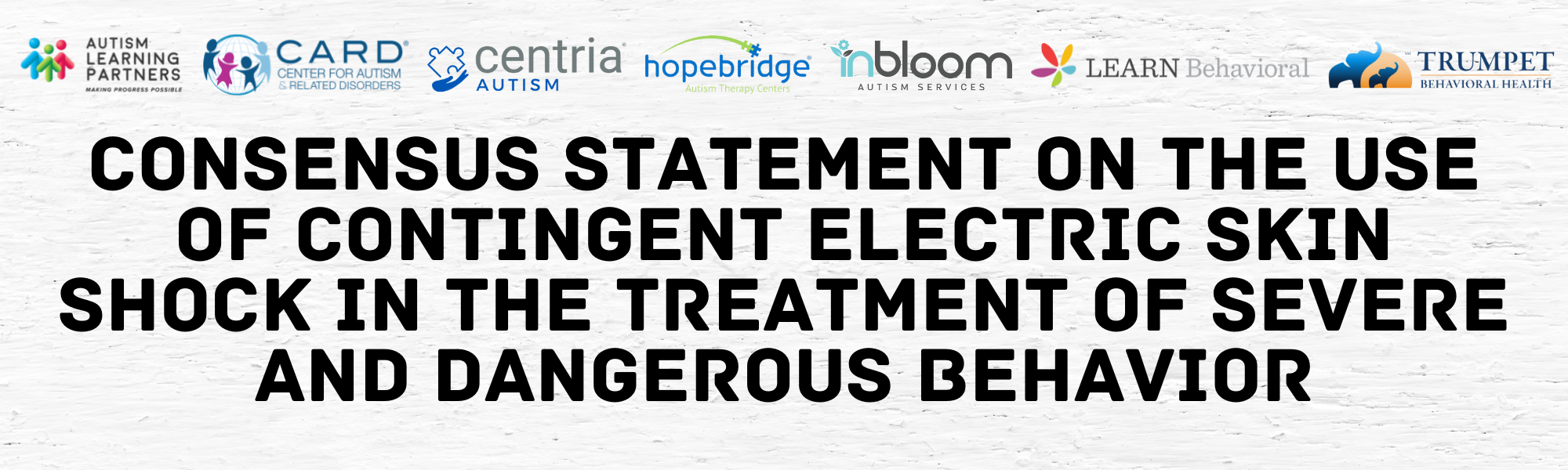
We, Autism Learning Partners, Center for Autism and Related Disorders, Hopebridge, and LEARN Behavioral, unequivocally condemn the use of painful aversive procedures, including the use of contingent electric skin shock (CESS), under the scope of practice of applied behavior analysis (ABA) based treatment for challenging behaviors. Our organizations do not and never will employ the use of CESS under any circumstance.
We are providers of therapeutic ABA-based autism services across 33 states within the United States, representing care that is provided to thousands of clients across all age ranges (infant to adult) and levels of autism severity.
In 2013, in a special report to the United Nations, the United States Government was called upon to investigate human rights abuses, in violation of UN Convention against Torture, against students at the Judge Rotenberg Educational Center (JRC); these actions included use of contingent electric shock and prolonged physical restraint (Mendez, 2013, p. 83-84).
In March 2020, the U.S Food and Drug Administration (FDA) issued a ban on the use of CESS in the treatment of severely harmful behavior in individuals with disabilities, including autistic children and adults (Banned Devices, 2020).
The FDA’s ban was subsequently overturned by the Washington D.C. Circuit Court of Appeals, in July 2021. The ruling was not based on whether the practice is inhumane but rather on the grounds that the FDA does not have the authority to ban specific uses of a medical device, which was declared the responsibility of each state (Judge Rotenberg Educational Center v. FDA, 2021).
In October 2021, Massachusetts Association for Applied Behavior Analysis (MassABA), a regional chapter of ABA professionals practicing in the same state where the JRC practices, condemned the use of CESS in ABA due to ethical and scope-of-practice concerns.
In November 2021, the Association for Behavior Analysis International, the largest professional membership group in behavior analysis, announced a task force to investigate the use of CESS in ABA-based practice and to issue a formal statement. As of this date, the task force’s work is underway, but a formal statement has not yet been published.
In light of the ongoing legal battles at the federal level to ban and subsequently allow use of CESS in ABA services, in adherence to the updated Ethics Code for Behavior Analysts (Behavior Analyst Certification Board ®, BACB(R), 2020, effective January 2022), and because of our large representation of ABA-based autism services across the U.S., we feel a clear multi-organizational stance on this issue is warranted.
ABA is a compassionate science; ABA-based autism services help individuals access their full potential through sustainable, client-centered, meaningful outcomes. Based on condemnation by the United Nations that have not been resolved by permanent legal action, as well as significant ethical and scope of practice concerns disseminated by multiple groups of experts who have engaged in thoughtful and extensive review (e.g., MassABA, 2021; Zarcone et al., 2020), we wish to address this issue as providers. By advocating for the discontinuation of this concerning practice, and by clarifying its place outside of the scope of ethical practice, we hope to open space for the continued evolution of contemporary ABA.
Evidence does not support the use of CESS. In a review of evidence-based practices for the treatment of individuals with ASD, the National Autism Center (2015) determined CESS had an unestablished level of evidence (National Autism Center, 2015). Furthermore, the International Association for the Scientific Study of Intellectual and Developmental Disabilities (IASSIDD), an international group of researchers, clinicians, students, parents, and self-advocates, provided a literature review to support their opposition to the use of CESS to target severe aggression and self-injury. Their review identified methodological concerns, insufficient evidence of long-term effectiveness, ethical concerns, and adverse side effects including physical and psychological injury (Zarcone et al., 2020).
As behavior analysts, we are also bound by a code of ethics. The core principles from the Ethics Code for Behavior Analysts (BACB, 2020) state that behavior analysts are to:
It is our consensus that these guiding principles are in direct opposition to the use of CESS in the population we serve. Furthermore, the consideration of individual assent was introduced to the latest revision of the ethics code, which is indicative of progress in our field to incorporate client feedback into treatment planning, building trust between client and practitioner.
If it is appropriate to reduce a behavior, there are many other evidence-based practices available without severe ethical implications. Strategies including antecedent-based interventions, augmentative and alternative communication, behavioral momentum, differential reinforcement, functional behavior assessment, functional communication training, and reinforcement have been determined to meet evidence-based practice criteria (Hume et al., 2021). Practitioners have a wealth of options to treat severe challenging behaviors while also showing compassion and upholding their client’s dignity.
We direct the reader to the excellent rationales and resources provided by MassABA in their position statement (2021).
Behavior Analyst Certification Board. (2020). Ethics code for behavior analysts.
Judge Rotenberg Educational Center v. FDA, No. 20-1087 (D.C. Cir. 2021).
National Autism Center. (2015). Findings and conclusions: National standards project, phase 2. Zarcone, J. R., Mullane, M. P., Langdon, P. E., & Brown, I. (2020). Contingent electric shock as a treatment for challenging behavior for people with intellectual and developmental disabilities: Support for the IASSIDD policy statement opposing its use. Journal of Policy and Practice in Intellectual Disabilities, 17(4), 291-296.
LEARN to Sponsor WIBA’s New Hall of Fame to Commemorate Women Leaders in Behavior Analysis.
Baltimore, MD (March 31, 2021) – Building on efforts to promote diversity, equity, and inclusion within its organization and across the field of behavior analysis, LEARN Behavioral announces a new commitment to Women in Behavior Analysis (WIBA), an organization founded in 2017 to provide opportunities for women behavior analysts to grow in their discipline through an annual conference and other events. Through this commitment, LEARN will sponsor WIBA’s new Hall of Fame, an initiative to honor the accomplishments of women leaders and pioneers in behavior analysis—and establish an historic record to educate existing and future behavior analysts on the contributions of these pioneers.
This first year, WIBA plans to induct four women to the Hall of Fame, followed by five each year afterward. Inductees must have at least 40 years of experience in the field and serve as a role model for the current or past generation of behavior analysts. In addition, the all-female selection committee will evaluate each applicant’s awards and accolades, scholarly contributions, teaching, mentoring, and leadership positions.
As a sponsor, LEARN will host a plenary session and reception during WIBA’s annual conference to honor the women selected. The conference will take place July 29 to 31, 2021, with an in-person reception and live stream of the announcement of the first women inducted into the Hall of Fame.
“In a field in which roughly 85 percent of behavior analysts are female, I’m thrilled to see WIBA create an official Hall of Fame to honor and push forward the tremendous work of women in ABA,” says Hanna Rue, Chief Clinical Officer for LEARN, and a noted ABA leader, scholar, and practitioner in her own right. “As a sponsor of WIBA’s Hall of Fame, and as an organization committed to diversity, equity, and inclusion, we’re excited to be part of this important step to commemorate the many talented and dedicated women at the forefront of our field, devoting their lives to helping children and families with autism.”
LEARN Behavioral specializes in using contemporary applied behavior analysis (ABA) to personalize treatment for children and young adults with autism. With clinical insights refined through decades of service to the autism community, we support more than 5,000 clients across 15 states and the District of Columbia through brands that include AST, BACA, WEAP, BCI, Total Spectrum, Trellis, and SPARKS. Our team consists of more than 30 doctoral-level clinicians, 450 Board Certified Behavior Analysts®, and 4,000 behavior technicians who share a common mission: to find success for every child in our care.
BALTIMORE, MD – Learn It Systems is changing its name to LEARN Behavioral to better reflect its focus on behavioral health market. Over the past several years, the organization has transformed into one of the leading networks of providers serving children with autism and other special needs, and the new brand better aligns this vision.
Michael Maloney, LEARN Behavioral’s CEO and Founder shared, “This name change reflects the evolution of our organization and our dedication to grow and support the behavioral health needs of the communities we serve. We are very proud of the difference we make in the lives of our clients and their families, and we are excited to do even more good as we move forward and expand our footprint.”
LEARN’s primary focus is the delivery of Applied Behavior Analysis (ABA) therapy to children with autism and related disorders in their homes, schools, and in its learning centers. ABA is the only evidence based therapy for children with autism. Justin Funches, President of LEARN’s autism provider network, continued, “LEARN’s network of autism service providers is of the broadest and highest quality in the country. The hallmarks of our clinical services are truly individualized treatment, a collaborative approach, data-driven decision making, and a commitment to meaningful outcomes for our clients and their families.”
The LEARN team currently includes more that 3,000 professionals passionate and purposeful about finding success for every child in their care. The team, one of the broadest in the industry, includes behavior analysts, technicians, teachers, psychologists, therapists and other specialist who embrace LEARN’s culture of clinical excellence and professional growth.
ABOUT LEARN BEHAVIORAL
LEARN is the leading network of providers serving children with autism and other special needs. LEARN specializes in behavioral health treatment based on the science of Applied Behavior Analysis (ABA), and is committed to providing programs and services that are family-focused, community minded, and delivered with the highest clinical integrity. The LEARN team delivers more than 1.5 million hours of services annually and is comprised of more than 3,000 passionate professionals dedicated to nurturing every child’s personal best. www.learnbehavioral.com.
WINTHROP, MA AND BALTIMORE, MD… LEARN Behavioral, a national organization of providers serving children with autism and other special needs, has recently appointed Marisa Petruccelli, Psy.D., a Licensed Clinical Psychologist in Massachusetts, as Director of Mental Health.
In her new role, Dr. Petruccelli will integrate and unify LEARN Behavioral’s providers in mental health by clinically and operationally standardizing the services across the network, ensuring the highest quality of care. LEARN Behavioral’s providers are located throughout the U.S. and include Wisconsin Early Autism Project (WEAP), Autism Spectrum Therapies (AST), Behavioral Analysis Center for Autism (BACA), Behavioral Concepts (BCI), Total Spectrum, Trellis, and SPARKS.
A clinical researcher with a background and training in behavioral analysis, Dr. Petruccelli has more than two decades of experience in the field of neurodevelopmental disorders. She holds a Bachelor of Science in Psychology from George Mason University, Fairfax, VA, a Master of Science in Clinical Psychology and a Doctor of Psychology from the American School of Professional Psychology at Argosy University, Washington, D.C. She completed her early graduate training at Children’s National Hospital in Washington, D.C., and completed pre- and postdoctoral training at The May Institute, Inc., in Randolph, MA. She is a clinical psychologist licensed in Massachusetts.
Previous to LEARN Behavioral, Dr. Petruccelli was the clinical director at the May Center for Evaluation and Treatment at The May Institute, Inc., overseeing operations, assessment and clinic services licensed by the Department of Public Health, as well as the clinical staff of licensed psychologists, postdoctoral fellows and predoctoral interns with specialized training in the Autism Diagnosis Observation Schedule, Second Edition (ADOS-2). Dr. Petruccelli held several roles during her 10 years with The May Institute, including The May Center’s director for Home-Based Services. Most noteworthy during this time, Dr. Petruccelli established intensive in-home behavioral services for youth with severe emotional disability through the Children’s Behavioral Health Initiative (CBHI).
Dr. Petruccelli is a research fellow in the Department of Psychology at University of Massachusetts Boston, where she recently engaged in NIH-grant funded research with children and families to reduce health disparities in accessing assessment and treatment services for Autism Spectrum Disorder (ASD). Dr. Petruccelli’s research has been published in peer-reviewed journals such as the Journal of Autism and Developmental Disorders and the Journal of Clinical and Translational Science.
Dr. Petruccelli’s contributed articles have been published in Exceptional Parent Magazine and others.
Most recently, Dr. Petruccelli served as a lecturer at University of Massachusetts Boston for the School Psychology Graduate Program on behavior therapy in schools. She has also been a guest lecturer at Suffolk University, Boston College, Northeastern University and University of Connecticut-Neag School of Education, discussing various topics in behavior analysis.
Dr. Petruccelli’s invited addresses include presenting at International Society for Autism Research. She has also presented at teacher professional development series events in public school districts around the New England area. Over the years, Dr. Petruccelli has presented at many local, regional and national conferences and workshops, including Applied Behavior Analysis International’s annual conventions.
Dr. Petruccelli is a recipient of an Intramural Research Training Award from the National Institutes of Health.
Dr. Petruccelli is a former subcommittee member of the Massachusetts Autism Commission.
She is a resident of Winthrop, MA.
About LEARN Behavioral
LEARN Behavioral specializes in using contemporary applied behavior analysis (ABA) to nurture the unique potential of children and young adults with autism. With clinical insights and best practices refined through our decades of service to the autism community, we support more than 5,000 clients through brands that include WEAP, AST, BACA, BCI, Total Spectrum, Trellis, and SPARKS. Our team consists of more than 30 doctoral-level clinicians, 450 Board Certified Behavior Analysts®, and 4,000 behavior technicians who share a common mission: to find success for every child in our care.
“Connecting the Autism Community One Podcast at a Time”
LEARN Behavioral provides valuable insight and information from inspiring individuals in the autism community through their unique All Autism Talk podcast found on Spotify and on their website at www.learnbehavioral.com/allautismtalk
BALTIMORE, MD. LEARN Behavioral, the leading network of providers serving children with autism and other special needs, announced that Justin Funches has been named President of LEARN’s autism provider network.
Michael Maloney, Founder and CEO of LEARN, commented, “Over the last 4 years, Justin has been instrumental in transforming our organization into one of the leading provider of behavioral health treatment for children with autism, and I am excited for Justin to continue to expand our network, improve our clinical infrastructure and build our industry leading team.”
Prior to this role, Justin was the Vice President of Operations for Autism Spectrum Therapies (AST), LEARN’s largest provider of Applied Behavior Analysis (ABA). In this new role he will oversee all operations for LEARN’s autism provider network.
In addition, Robert Haupt, MA, BCBA was named Executive Vice President of LEARN’s autism provider network.
COLUMBIA, MARYLAND. Trellis Services, one of the largest and most respected autism services organization in Maryland, announced the opening of a new learning center in Columbia, Maryland.
Ryan High, BCBA, Trellis’s Assistant Clinical Director shared, “We are thrilled to be able to offer excellent center-based option for families in Howard County. Our early learning center will address a variety of areas including: communication, social skills, academic readiness, daily living skills, and the reduction of problematic behavior. Our goal is to prepare our clients for kindergarten, while also equipping them with the crucial skills they need to navigate their world with independence and confidence for years to come.“
The new center is located 8970 MD-108 Suite B, Columbia, MD 21045, and serves children age 2 to 8. Trellis also provides home-based services throughout Howard County, Anne Arundel County, Baltimore City, Baltimore County, Harford County and Carroll County, and in it main learning center in Sparks, Maryland.
About Trellis Services
Trellis is one of the largest and most respected autism services organizations in Maryland. Since 2001, Trellis has supported children and families all across the state through home, school, community based services, and at their learning centers. Their passion and dedication to providing the highest standards of care enable Trellis to continuously meet and exceed their clients’ expectations. Trellis is a part of the LEARN Provider network. www.trellisservices.com
BALTIMORE, MD and Elmhurst, IL: LEARN Behavioral, the leading network of providers serving children with autism and other special needs, announced the acquisition of Total Spectrum, with operations across Illinois, Northwest Indiana, Michigan and Wisconsin, further expanding its provider network in the Midwest.
Brian Dacy, Co-Founder of Total Spectrum stated, “Total Spectrum has stood for high quality in-home and center-based ABA services. We are proud to grow and provide more services in communities that need us. Partnering with LEARN, opens us to expand our reach to further our mission.”
In combination with Autism Spectrum Therapies (AST) IL and MI and Wisconsin Early Autism Project (WEAP), LEARN now provides services throughout the Midwest. Justin Funches, President of LEARN’s autism provider network, continued, “Brian and his team share our commitment to providing exceptional clinical services and professional development of staff. We are excited to team up and continue the great work of Total Spectrum.”
About Total Spectrum
The mission at Total Spectrum is to use Applied Behavior Analysis to achieve an environment that allows the clients we serve to reach their maximum potential and highest level of independence. We work in partnership with families to achieve success for our clients through reducing challenging behavior and increasing skills important to their daily life. Our services are individualized and aimed to deliver maximum independence for every child we serve. www.totalspectrumcare.com.
About LEARN Behavioral
LEARN is the leading network of providers serving children with autism and other special needs. LEARN specializes in behavioral health treatment based on the science of Applied Behavior Analysis (ABA), and is committed to providing programs and services that are family-focused, community minded, and delivered with the highest clinical integrity. The LEARN team delivers more than 1.5 million hours of services annually and is comprised of more than 3,000 passionate professionals dedicated to nurturing every child’s personal best. www.learnbehavioral.com.
BALTIMORE, MD: LEARN Behavioral, the leading network of providers serving children with autism and related needs, announced today that San Francisco-based private investment firm Gryphon Investors has invested in the organization.
Michael Maloney, Founder & CEO of LEARN, commented, “We are delighted to partner with the team at Gryphon. For nearly 15 years, we have been developing thoughtful programs that deliver meaningful progress for our clients. We have steadily grown our ability to provide access to our high quality clinical and intervention services across the country and we look forward to enhancing that ability with Gryphon’s strategic, financial and operational resources.”
The investment by Gryphon will allow the company to continue to invest in its industry-leading quality infrastructure, the professional development of staff and expand LEARN’s network to new communities. Gryphon Operations Partner Kevin Blank said, “LEARN’s leadership has shown a remarkable ability to deliver successful results to families in need and to replicate its high-quality services in new communities.”
About LEARN
LEARN is a leading network of providers serving children with autism and other special learning needs. LEARN specializes in behavioral health treatment based on the science of Applied Behavior Analysis (ABA) and is committed to providing programs and services that are family-focused, community-minded, and delivered with the highest clinical integrity. The LEARN team delivers more than 2.0 million hours of service annually and is comprised of more than 4,000 passionate professionals dedicated to nurturing each child’s personal best. For more information, visit learnbehavioral.com.
About Gryphon Investors
Based in San Francisco, Gryphon Investors (gryphoninvestors.com) is a leading private equity firm focused on profitably growing and competitively enhancing middle-market companies in partnership with experienced management teams. Gryphon prioritizes investment opportunities where it can form strong partnerships with owners and executives to build leading companies, utilizing Gryphon’s capital, specialized professional resources, and operational expertise.
Children diagnosed with ASD may continue to receive critical ABA therapy
remotely during COVID-19 pandemic.
BALTIMORE, MD… LEARN Behavioral, the leading network of providers serving children with autism and other special needs, announces the availability of telehealth Applied Behavior Analysis (ABA) services to children diagnosed with Autism Spectrum Disorders (ASD) and their families nationwide through their regional providers.
To continue providing critical ABA services to client families during the coronavirus (COVID-19) pandemic, LEARN has innovated their service delivery model and capabilities to provide telehealth ABA, or “teleABA”, services.
TeleABA provides another option for families who prefer virtual therapy services over in-person therapy, or who have household family members who are at higher risk for severe illness.
It is ABA therapy overseen by a Board-Certified Behavior Analyst (BCBA) that parallels in-person treatment.
“The COVID-19 response requiring nationwide social distancing and other safety guidelines
has left many parents of children on the autism spectrum wondering how to maintain the gains their children have made in ABA therapy,” explained Hanna Rue, Ph.D., BCBA-D, Vice President of Clinical Development for LEARN. “LEARN is helping parents by providing the option of teleABA therapy which helps ensure that their children are able to continue their forward momentum towards established treatment goals.”
TeleABA Services
Treatment for ASD is in accordance with state and federal emergency guidance regarding medically necessary telehealth services. It is imperative that children with ASD avoid any break in ABA therapy as this may cause distress, disruption and potential behavior regression. TeleABA is the delivery of evidence-based ABA therapy with master level clinicians via HIPAA-compliant videoconferencing, which is accessible by computer, tablet or smartphone.
LEARN’s teleABA services include direct treatment and parent consultation. Direct treatment is one-on-one treatment sessions with a child geared towards maintaining and generalizing communication, play skills and behavioral progress. Parent consultation provides an opportunity to discuss daily routines and challenging behaviors, identify targets, and implement a plan.
TeleABA enables families to continue to build upon and reinforce skills including, but not limited to:
– Potty training
– Bedtime/sleep routine
– Screen time
– Personal hygiene routine, including hand-washing
Through teleABA, LEARN providers help children and families in a number of ways. For example: discussing strategies and progress on a desired goal; developing a routine that fits in to your family’s schedule; providing individual reinforcement strategies; setting and explaining clear expectations; and offering “in the moment” parent coaching along with references to help successfully reach your child’s goal.
Parent Webinars
One innovative program being launched through teleABA is Parent Webinars. With COVID-19 changing day-to-day lives, new challenges are presenting and old ones are resurfacing. Parent Webinars, offered on a weekly basis, enable families facing similar challenges to join in virtual presentations to share solutions and helpful info.
The Parent Webinars are led by Ashley Williams, a Clinical Director in the Greater Boston area within the LEARN provider network. Each webinar is guided by a BCBA and will include clinical tips, strategies, and suggestions to help parents in these challenging times.
Dr. Rue continued, “We have received a tremendous response from our families, who are experiencing new successes due to our virtual teleABA services. It is our hope that teleABA treatment will continue to be accepted by insurers beyond COVID-19, as this will enable us to serve a greater number of children and families on the autism spectrum who need services but have limited in-person access to ABA providers.”
In total, LEARN has served over 2,500 families through teleABA, with nearly 1,000 trained providers across the nation who have delivered sessions. LEARN is dedicated to supporting their staff and has developed a comprehensive resource library which enables them to access tools, resources, training and support online.
About LEARN
LEARN is a leading network of prov
iders that serves children with autism and other special learning needs. LEARN specializes in behavioral health treatment based on the science of Applied Behavior Analysis (ABA) and is committed to providing programs and services that are family-focused, community-minded, and delivered with the highest clinical integrity. The LEARN team delivers more than 2.5 million hours of service annually and is comprised of more than 5,000 passionate professionals dedicated to nurturing each child’s personal best. For more information, visit learnbehavioral.com.
Creating a more diverse workplace, raising awareness about unconscious biases, providing advancement opportunities for everyone—these initiatives have long been part of LEARN’s DNA. But in 2020, with heightened awareness around social disparities in our country, the company’s employees, supported by leadership, decided to formalize and flesh out these goals with the launch of LEARN’s Diversity, Equity, and Inclusion (DEI) Plan. While DEI committees formed and started working in the summer of 2020, LEARN chose February to announce the plan publicly in honor of Black History Month and the United Nation’s World Day of Social Justice on February 20.
“We’re in a unique moment in this country,” says Justin Funches, the president of LEARN Autism Services and chair of the DEI Leadership Committee. “As a black man and as a leader in an organization with incredible diversity, I recognize the great opportunity and responsibility our initiative presents. And I know that better outcomes—for both our clients and our teams—come when we include more voices and better understand each other’s experiences.”
As a first item of business, LEARN’s DEI committee drafted an official statement and established five priorities:
The Sum of All Parts:
LEARN knows we’re not all the same. Recognizing differences and tailoring our approach is at the core of what we do. That’s why we’re committed to fostering a culture that embraces what makes us each unique—be it race, ethnicity, gender/gender identity, sexual orientation, religion, national origin, disability/ability, and socioeconomic background. LEARN aims to acknowledge the lived experiences and diversity of perspectives among our staff and the children and families we serve. We pledge to create a community centered around trust, respect, tolerance, and empathy. Together, we’re better.
Our priorities on this journey include:
Positioning LEARN as a diverse, inclusive, and equitable organization.
Creating policies and practices that are culturally sensitive to differences in our staff and clients.
Equipping teams with the tools they need to navigate the myriad inequities in our society.
Actively embracing the diversity of the communities we serve.
Building leadership teams that are diverse and provide opportunities for typically underrepresented populations.
LEARN also created internal communications—a monthly digital newsletter and web portal—for employees to share news related to diversity, equity, and inclusion. With systems and priorities in place, the real work began. Teams of staff from across the country solicited feedback, brainstormed ideas, and asked the hard questions.
One activity involved a series of forums that brought together Black behavior technicians from across the country to “speak with candor as they shared their stories and experiences of being Black in the field of applied behavior analysis (ABA),” says Brandon Whitfield, Clinical Director of AST’s Learning Center in Beach Cities, California. “Their stories were heartfelt, gut-wrenching, and awe-inspiring.” The next steps, says Whitfield, who serves on a DEI committee and co-hosted the forum, are to analyze the data collected and use it to shape future leadership practices and inform new programs and policies.
One such program was announced to employees last month—a partnership with National University to fully support tuition Black or African American staff members to complete National’s ABA master’s program. In addition to tuition support, LEARN will designate a mentor to help each recipient with coursework, career planning, and the behavior analyst certification process. Once certified, recipients can oversee applied behavior analysis (ABA) therapy to children with autism.
“Right now, the percent of Black behavior analysts working in the ABA field does not reflect the percentage of African Americans in the population of the United States,” says Whitfield, who spearheaded the partnership with National University. “Our new program is a step to change that.”
As LEARN’s DEI committees continue to push forward their goals, employees say they’re thrilled to join the effort and see the organization back these critical initiatives. “As a woman of color, I’ve always been acutely aware and passionate about the ways in which barriers affect education access in minority and low-income communities,” shares Margarita Mesa, Director of Program Quality and Operations for LEARN It System’s Academic Services and a member of a DEI committee. “I’m confident that this committee of intelligent, forward-thinking colleagues will offer creative strategies and purposeful ideas to make strides in this ever-important arena, and I look forward to the thoughtful dialogue as we collectively work to better understand and support the diverse communities in which we work.”
Stay tuned for LEARN’s series of blog posts and podcasts to raise awareness about ABA as a social justice issue and to highlight Black professionals working to make a difference in the lives of children with autism.